

Table of Contents
You’ve tried the usual advice. Think positive. Fake it till you make it. Stand in power poses before meetings. Yet here you are, still feeling unsure of yourself when it matters most. The truth is, most confidence advice focuses on surface-level fixes that don’t address what’s really holding you back.
This guide shows you 10 habits to boost confidence that work differently. These aren’t quick tricks or temporary mindset shifts. They’re quiet, consistent practices proven to rewire how you see yourself and how you show up in 2026. You’ll learn exactly how to boost confidence through small daily actions anyone can fit into a busy schedule.
You’ll discover why confidence matters more than ever in 2026, then dive into 10 specific habits covering everything from morning affirmations and gratitude journaling to setting boundaries and learning new skills. Each habit includes what it is, why it works and how to start today. By the end, you’ll have a clear roadmap for ways to boost confidence that stick long-term, plus answers to common questions about building self-esteem quickly and sustainably.
To understand the deeper patterns behind these behaviors, explore our complete guide to relationship psychology.
Why Confidence is Key in 2026
Learning how to boost confidence in 2026 requires understanding why it matters more than ever. The world in 2026 moves faster than ever. Remote work blurs boundaries between personal and professional life. Social media feeds create endless comparison traps. Career shifts happen quickly and relationships require more intentional effort.
When you boost confidence, you gain the foundation to handle these changes without falling apart. It’s not about perfection or having all the answers. It’s about trusting yourself enough to try, fail and adjust without your entire sense of worth collapsing.
Mental health challenges continue rising. According to recent studies from the American Psychological Association, anxiety and self-doubt affect millions of people daily. Building confidence through small habits protects your mental wellbeing and helps you maintain work-life balance in a demanding world.
The old idea of confidence as charisma or bravado doesn’t work anymore. True confidence in 2026 comes from self-awareness, emotional regulation and the ability to set boundaries. These 10 habits to boost confidence help you develop all three.
Top 10 Confidence-Boosting Habits for 2026
These 10 habits to boost confidence address different aspects of your mental, emotional and physical wellbeing. Each habit works independently, but together they create a complete system for building lasting self-assurance. Start with whichever habit resonates most and build from there.
1. Morning Affirmations (Boost Your Self-Worth Before Your Day Starts)
Morning affirmations are one of the simplest ways to boost confidence before your day even starts. These short statements you say to yourself each day reinforce positive beliefs about who you are. They aren’t about pretending everything’s perfect. They’re about redirecting your brain away from automatic negative thoughts.
Your brain believes what you tell it repeatedly. When you wake up and immediately think about what’s wrong or what you lack, you set a tone of scarcity. Affirmations help you start from a place of enough.
Write 3 to 5 affirmations on a sticky note and place it where you’ll see it first thing. Keep them present tense and personal. “I am confident in my decisions” works better than “I will be confident someday.” Say them out loud while drinking your coffee or getting ready.
This habit takes two minutes. The shift happens over weeks of repetition, not overnight. If you struggle with insecurities in relationships, affirmations around your worth independent of others make a difference.
2. Practice Gratitude Journaling (Shift Your Focus to What’s Working)
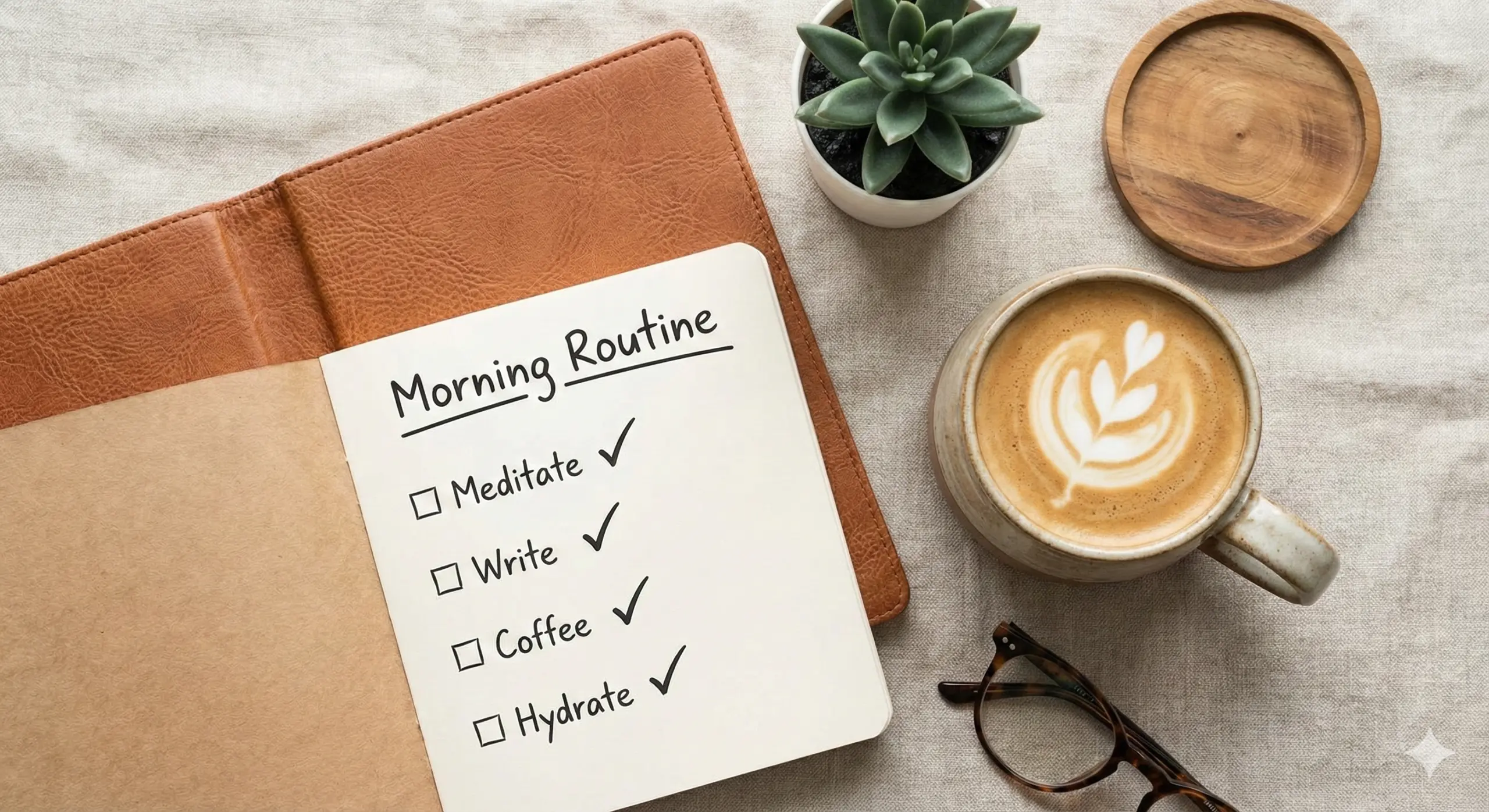
Gratitude journaling means spending five minutes writing down things you appreciate about your life. This practice trains your brain to notice what’s going right instead of fixating on what’s missing.
According to Harvard Health Publishing, People who practice gratitude regularly report higher levels of confidence and lower levels of anxiety. When you acknowledge good things in your life, you build evidence against the belief you’re failing or falling behind.
Keep a journal by your bed. Every night before sleep, write three specific things you’re grateful for. “I’m grateful my coworker checked in on me today” is more effective than “I’m grateful for my job.” Specificity makes the practice meaningful.
Gratitude doesn’t ignore problems. It balances your perspective so challenges don’t consume your entire mental space. This habit supports better sleep quality, which directly affects how confident you feel the next day.
3. 10-Minute Daily Mindfulness Meditation (Center Your Thoughts)
Mindfulness meditation is a proven method to boost confidence by centering your thoughts. This practice involves sitting quietly and observing your thoughts without judgment. Ten minutes of daily meditation reduces stress, improves focus and helps you respond to situations instead of reacting impulsively.
Confidence grows when you stop letting every anxious thought dictate your actions. Meditation creates space between stimulus and response. You notice the thought “I’m not good enough” without believing it automatically.
Download an app like Calm, Headspace or Insight Timer. Start with guided meditations designed for beginners. Sit somewhere quiet, close your eyes and follow the instructions. If your mind wanders, that’s normal. The practice is noticing and returning your focus.
Consistency matters more than duration. Ten minutes daily beats an hour once a week. If anxiety keeps you awake, pair this with strategies on how to stop overthinking at night for better rest.
4. Set Daily Intentions (Start Every Day with Purpose)
Daily intentions are specific goals or mindsets you want to carry through your day. Setting intentions gives you direction and reminds you that you have control over how you show up, even when circumstances feel chaotic.
When you drift through days reacting to whatever comes up, confidence erodes. You feel like life happens to you instead of you actively participating. Intentions shift this dynamic by making you the author of your day.
Every morning, write down three intentions. One for your mindset, one for your actions and one for how you want to treat others. “I will stay calm under pressure,” “I will complete my presentation,” and “I will listen without interrupting” give you clear targets.
Review your intentions at night. Notice when you followed through and when you didn’t. This builds self-trust over time, which is the foundation of lasting confidence.
5. Move Your Body for 20 Minutes (Build Physical Confidence)

You don’t need intense workouts to boost confidence through movement. A 20-minute walk, gentle yoga or dancing in your living room counts. The goal is consistency, not exhaustion. Movement reminds you that you’re strong and your body works for you.
You don’t need intense workouts. A 20-minute walk, gentle yoga or dancing in your living room counts. The goal is consistency, not exhaustion. Movement reminds you that you’re strong and your body works for you.
Pick something you enjoy. If you hate running, don’t force it. Find a movement practice you look forward to, even slightly. Schedule it like an appointment so it doesn’t get pushed aside by other demands.
Physical confidence affects how you carry yourself. When you stand taller and move with ease, people respond differently. This reinforces your internal sense of confidence through external feedback. Pair this habit with foods for stress relief to support your overall wellbeing.
6. Limit Social Media to 30 Minutes Daily (Protect Your Mental Space)
Social media fuels comparison and self-doubt. Scrolling through curated highlight reels makes you feel like everyone else has it together while you’re falling behind. Limiting your time on these platforms protects your confidence from constant erosion.
Studies show excessive social media use correlates with anxiety, depression and low self-esteem. The algorithm feeds you content designed to trigger emotional reactions, not content that builds you up.
Set a daily limit of 30 minutes across all platforms. Use your phone’s screen time settings to enforce this boundary. When you feel the urge to scroll, pause and ask what you’re avoiding or what you’re really looking for.
Replace scrolling time with activities that genuinely restore you. Read, call a friend, journal or take a walk. You’ll notice your mood stabilizes and your confidence grows when you’re not constantly measuring yourself against others. Explore self-care trends that add value instead of draining your energy.
7. Practice Saying No Without Guilt (Set Boundaries That Protect Your Energy)
Saying no is a skill most people avoid because they fear disappointing others. But agreeing to things you don’t want drains your energy and builds resentment. Learning to decline requests politely protects your time and reinforces that your needs matter.
Confidence requires boundaries. When you say yes to everything, you signal to yourself that everyone else’s priorities come before yours. This chips away at self-respect and leaves you feeling overwhelmed.
Start small. Decline one request this week that you would normally accept out of obligation. Use simple language like “I appreciate you thinking of me, but I’m not able to commit to this right now.” You don’t owe lengthy explanations.
Notice what happens. Most people respect boundaries more than you expect. The ones who don’t weren’t respecting you to begin with. Saying no creates space for the things and people supporting your growth, including maintaining signs of a healthy relationship in your life.
8. Celebrate Small Wins Daily (Acknowledge Your Progress)
Small wins are the daily accomplishments you dismiss as insignificant. Finishing a task, having a good conversation or sticking to your routine all count. Celebrating these moments trains your brain to recognize your capabilities instead of focusing only on what’s left undone.
Confidence builds through accumulated evidence. When you only acknowledge major achievements, you ignore the small proof points showing you’re competent and capable. Your brain needs regular reminders of what you’re doing right.
At the end of each day, write down three things you accomplished. They don’t need to be impressive. “I replied to all my emails,” “I drank enough water,” and “I stayed patient during a frustrating call” all qualify.
This practice shifts your internal narrative from “I never do enough” to “I’m making progress.” Over time, this reframe changes how you see yourself and boosts your willingness to take on bigger challenges.
9. Learn One New Skill Every Quarter (Prove to Yourself You’re Capable of Growth)
Learning new skills demonstrates you’re adaptable and capable. Each time you move from beginner to competent in something, you build confidence in your ability to handle unfamiliar situations. This transfers to other areas of your life.
Pick something aligned with your interests or goals. It doesn’t need to be career-related. Learning to cook a new cuisine, speaking basic phrases in another language or playing an instrument all work. The point is challenging yourself and following through.
Break the skill into small steps. Commit to practicing 15 minutes daily or three times per week. Track your progress in a simple notebook or app. Seeing improvement over weeks reinforces that effort leads to results.
When you prove to yourself you finish what you start, your confidence in tackling other challenges grows. This habit also keeps your mind engaged and prevents stagnation. If you’re trying to stay productive during daily struggles, learning something new provides structure and purpose.
10. End Each Day with a Reflection Ritual (Process Your Experiences Intentionally)
A reflection ritual is five minutes at the end of your day where you review what happened, how you felt and what you learned. This practice helps you process experiences instead of carrying unresolved emotions into the next day.
Confidence erodes when you let negative experiences pile up without examining them. Reflection lets you extract lessons from challenges and acknowledge what went well. It closes the loop on your day so you sleep better and wake up clearer.
Sit quietly before bed and ask yourself three questions. What went well today? What challenged me? What will I do differently tomorrow? Write down your answers or speak them out loud.
This habit builds self-awareness, which is essential for confidence. You start noticing patterns in your behavior and responses. You see where you’re growing and where you need more support. If past relationships still weigh on you, reflection helps you process feelings and work through how to get over your ex in a healthy way.
Related Relationship Guides
If you’re exploring emotional growth and relationships, these guides may help:
• Relationship Psychology: Complete Guide
• Signs Someone Is Constantly Thinking About You
• Signs of Emotional Attachment
• How to Stop Overthinking About Someone You Like
How These Habits Fit into Your Busy Day
These habits to boost confidence don’t require massive time commitments. Morning affirmations take two minutes. Gratitude journaling takes five. Meditation takes ten. Movement takes twenty. You’re looking at less than an hour total if you do everything.
Most people fail at habit-building because they try changing everything at once. Start with one or two habits. Practice them daily for two weeks before adding more. Quality and consistency beat quantity every time.
Pair new habits with existing routines. Say affirmations while making coffee. Journal while your kids eat breakfast. Meditate during your lunch break. Move your body before dinner. Set intentions while brushing your teeth.
When habits attach to behaviors you already do, they stick faster. You’re not carving out new time. You’re using time you already have more intentionally. This approach reduces friction and increases follow-through.
How to Make These Habits Stick in 2026
Building habits to boost confidence follows the same principles as any behavior change. Habit formation research shows it takes about 66 days for a behavior to become automatic. The first two weeks are the hardest. After that, momentum builds and the habit requires less conscious effort.
Track your progress somewhere visible. Use a habit tracker app, a simple calendar or a notebook. Check off each day you complete the habit. Seeing a streak builds motivation to keep going.
Find an accountability partner. Tell someone you trust about the habits you’re building. Check in weekly about your progress. Knowing someone else is watching increases your commitment.
When you miss a day, don’t spiral. One missed day doesn’t erase weeks of consistency. Acknowledge it, figure out what got in the way and start again the next day. Perfectionism kills habit formation faster than anything else.
Adjust as needed. If a habit isn’t working, modify it. Maybe morning affirmations feel better at night. Maybe 20 minutes of movement is too much to start, so you begin with 10. The goal is progress, not rigid adherence to someone else’s rules.
Frequently Asked Questions
What are the best habits to boost confidence?
The best habits to boost confidence include morning affirmations, gratitude journaling, daily mindfulness meditation, setting intentions and celebrating small wins. These practices rewire your brain to focus on strengths and progress instead of self-doubt. Physical movement and learning new skills also build confidence by proving your capability.
How can I boost my confidence in just one day?
While lasting confidence takes time, you see immediate shifts by practicing affirmations, setting clear intentions for your day and moving your body for 20 minutes. Standing tall, making eye contact and taking three deep breaths before stressful moments also provide quick confidence boosts when you need them.
How do I build confidence over time?
Build confidence over time through consistent small habits like daily journaling, meditation and celebrating wins. Track your progress to see improvement. Learn new skills quarterly to prove you’re capable of growth. Set boundaries by saying no to protect your energy. These practices compound into lasting self-assurance.
What is the quickest way to feel more confident?
The quickest confidence boost comes from adjusting your posture, taking slow deep breaths and saying one affirmation out loud. Physical changes signal your brain to shift your mental state. Moving your body for even five minutes releases endorphins and improves mood immediately, giving you a temporary confidence lift.
How can I boost confidence at work in 2026?
Boost confidence at work by setting daily intentions, preparing thoroughly for meetings and celebrating completed tasks. Practice speaking up once in every meeting. Limit comparing yourself to colleagues. Take breaks to reset mentally. Learn skills relevant to your role to feel more competent and prepared for challenges.
Download Your Confidence-Boosting Checklist for 2026
Get a free printable checklist with all 10 habits plus space to track your daily progress. Start building the confidence you need to thrive in 2026.
Final Thoughts
The best ways to boost confidence in 2026 don’t require dramatic changes or personality overhauls. They require small, quiet habits you practice consistently when no one else is watching.
These 10 habits work because they address the root causes of low confidence. When you boost confidence from the inside through better thought patterns, emotional regulation and consistent action, the results last. Each habit reinforces the others.
Start with one habit this week. Give it two weeks of consistent practice before adding another. Progress compounds slowly, but it compounds. Six months from now, you’ll look back and notice how different you feel.
Confidence isn’t about being perfect or fearless. It’s about trusting yourself to handle whatever comes. These habits build that trust one day at a time. If rumination about specific people drains your energy, addressing how to stop obsessing over someone supports your confidence work. Body acceptance also plays a role, so explore our guide to accepting your body as part of your journey.