

Table of Contents
Insecurities in a relationship often show up in subtle ways, like when your partner peeks at your phone without seeming to snoop. Not obviously snooping – just a casual glance when a notification lights up the screen. Later, when you mention grabbing lunch with a coworker, their whole mood shifts. They don’t accuse you of anything. They just get quiet. Distant. By evening, you’re walking on eggshells, uncertain what you did wrong.
This is what hidden insecurity in relationships looks like. Not dramatic complaints or obvious jealousy, but subtle behavioral shifts that damage emotional connection.
If you’ve ever wondered “is my partner insecure” or found yourself searching for “signs someone is insecure in a relationship” at 2 AM, you’re picking up on patterns that relationship experts recognize instantly. Insecurity doesn’t always announce itself through tears or confrontations. The most damaging forms hide behind behaviors that seem almost normal – until you step back and see the pattern.
The difference between healthy relationships and ones plagued by insecurity often comes down to recognizing these quiet warning signs. Research shows that unaddressed relationship insecurity creates cycles of jealousy, control, and emotional distance. When you identify subtle signs of insecurity in relationships early, you create opportunities for healing rather than letting patterns escalate.
This guide reveals 10 relationship psychology-backed behaviors that indicate someone is secretly insecure in a relationship. These aren’t the evident signs like constant jealousy or accusations but they’re the overlooked patterns that relationship experts identify as indicators of deeper insecurity.
“The most damaging insecurities hide behind seemingly normal behaviors.”
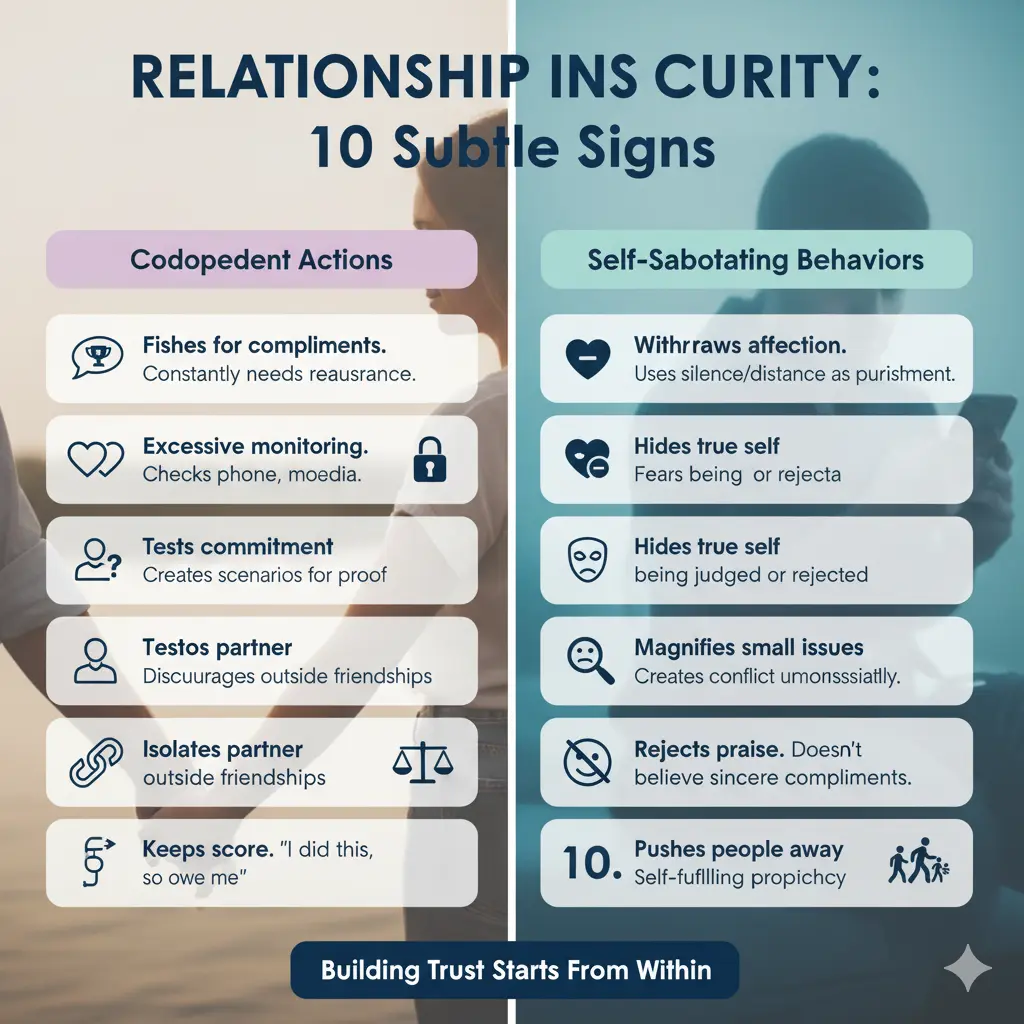
1. They Fish for Compliments – A Sign of Insecurities in a Relationship
Your partner makes comments like “I’m probably the worst person you’ve ever dated” or “You must think I’m so boring compared to your ex.” On the surface, this sounds like harmless self-criticism or even humor. Underneath, it’s a calculated fishing expedition for reassurance.
Why this reveals insecurity: People secure in relationships don’t need continuous validation through negative self-talk. This behavior, called “rejection sensitivity,” contains preemptively putting yourself down to gauge your partner’s reaction. They’re testing whether you’ll contradict them and provide reassurance about their worth.
Psychology research published in the Journal of Personality and Social Psychology (2018) found that people with anxious attachment styles use self-deprecating statements as indirect requests for validation. They frame their need for reassurance as casual comments, making it harder for partners to recognize the pattern.
What it looks like in practice:
- “I’m not as attractive as I used to be” (fishing for “You’re beautiful”)
- “You probably wish you were with someone more successful” (seeking “I love you exactly as you are”)
- “I’m such a mess, I don’t know why you put up with me” (wanting “You’re perfect to me”)
The hidden cost: While occasional reassurance is healthy, this pattern creates emotional exhaustion. Partners feel responsible for constantly managing the insecure person’s self-esteem, and the reassurance never seems to stick. Within hours or days, they need another dose.
Quick Checkpoint: Recognizing these patterns in yourself or your partner? Take our free Relationship Insecurity Assessment now to identify your specific attachment style and get personalized strategies.
2. Creating Unnecessary Drama Reveals Insecurities in a Relationship
You’ve had a peaceful week when unexpectedly your partner picks a fight over something small. They cancel plans last-minute to see if you’ll chase them. They mention an ex “accidentally” to gauge your jealousy. These aren’t random incidents but relationship tests.
Why this reveals insecurity: Relationship testing behavior stems from fear that love is conditional or temporary. Insecure individuals create artificial crisis situations to confirm you’ll stay during conflict. If you chase them when they pull away, it “proves” your commitment. If you react with jealousy when they mention exes, it “proves” you care.
A 2019 study in Personal Relationships found that anxiously attached individuals test partners 3-4 times more frequently than securely attached people. These tests momentarily relieve anxiety but damage trust over time.
Common testing behaviors:
- Starting arguments about nothing to see if you’ll fight for the relationship
- Pulling away emotionally to see if you’ll pursue them
- Talking about other romantic interests to provoke jealousy
- Threatening to leave to see if you’ll beg them to stay
- Creating complications to plans to test how much effort you’ll invest
The relationship impact: Partners grow tired navigating manufactured drama. Trust wear down because the insecure person’s needs feel manipulative rather than authentic. What started as anxiety-driven testing changes into toxic relationship patterns.
3. Monitoring Your Social Media Reflects Insecurities in a Relationship
Your partner likes photos within seconds of posting. They ask questions about people who comment on your posts. They notice immediately when you follow someone new or when your online activity changes. They might even check timestamps to see when you were “last active.”
Why this reveals insecurity: Social media monitoring provides anxious partners with a sense of control and information. They believe that tracking your online behavior prevents surprises or betrayals. This hypervigilance reflects deep-seated fear about what you’re doing when they’re not watching.
Research from Cyberpsychology, Behavior, and Social Networking (2020) shows that relationship insecurity directly correlates with Facebook surveillance behaviors. People who feel insecure in relationships spend 40% more time monitoring partner social media than secure individuals.
What excessive monitoring looks like:
- Asking who liked or commented on your posts
- Questioning why you didn’t post about them or your relationship
- Getting upset about who you follow or who follows you
- Checking your tagged photos and locations
- Bringing up posts or interactions from weeks ago
- Creating fake accounts to monitor you if you’ve blocked them
The subtle version most people miss: They don’t openly admit to surveillance. Instead, they casually mention details they could only know from deep social media investigation: “Oh, you went to that restaurant last week?” when you never told them, or “Who’s Sarah?” about someone who commented three weeks ago.
4. They Need to Know Your Location at All Times
“Where are you?” “Who are you with?” “When will you be home?” These questions seem normal when asked rarely. When your partner needs constant location updates, it exposes underlying insecurity and trust issues.
Why this reveals insecurity: Location tracking creates an illusion of control over potential threats. Insecure partners believe that knowing your whereabouts prevents infidelity or abandonment. This behavior stems from anxiety, not love, despite how they might frame it.
Studies on relationship control behaviors show that excessive location monitoring predicts relationship dissatisfaction and eventual breakup. The monitored partner feels suffocated while the monitoring partner’s anxiety never actually decreases because the root insecurity remains unaddressed.
How location tracking manifests:
- Requesting real-time location sharing on apps
- Asking for proof of location through photos or videos
- Calling or texting excessively when you’re out
- Getting upset if you don’t respond immediately with your whereabouts
- “Dropping by” your locations suddenly to verify you’re where you said
- Questioning details about your route, timing, or companions
The rationalization: Insecure partners validate this behavior with “I just want to make sure you’re safe” or “I like to know what you’re up to.” While safety concerns are valid, the frequency and anxiety attached to location questions expose deeper insecurity.
5. They Rush Major Relationship Milestones
You’ve been dating three weeks when they say “I love you.” They want to move in together after two months. They discuss marriage before you’ve had your first disagreement. This rush toward commitment appears romantic but often masks desperate insecurity.
Why this reveals insecurity: Love bombing and milestone rushing stem from fear of abandonment. Insecure individuals believe that rapid commitment locks you into the relationship before you discover their flaws and leave. They associate speed with security and depth with safety from rejection.
Relationship psychology research differentiates between healthy relationship progression and anxiety-driven rushing. Secure individuals build intimacy gradually through shared experiences and trust. Insecure individuals try to produce intimacy through assertions and commitments that haven’t been emotionally earned.
Red flag timeline behaviors:
- Saying “I love you” within the first month
- Discussing marriage before establishing emotional intimacy
- Wanting to move in together before knowing each other’s daily habits
- Pushing for meeting families immediately
- Getting upset if you want to slow down
- Interpreting desire for slower pace as rejection
Why this backfires: Rushed intimacy creates artificial closeness without the foundation to sustain it. When unavoidable conflicts arise, the relationship lacks the trust and understanding needed to pilot them. Partners feel pressured and trapped rather than choosing commitment freely.
📊 Expert Insight: Relationship psychologist Dr. Sue Johnson notes that “rushing attachment milestones is often compensation for insecure attachment – trying to lock in commitment before authentic intimacy develops.” Secure relationships build gradually through shared experiences, not declarations.
Feeling uncertain about your relationship pace? Download our Relationship Timeline Guide to see if you’re building healthy intimacy or compensating for insecurity.
6. They Compare You to Others Constantly
“My ex never made me feel this way.” “Why can’t you be more like [friend’s partner]?” “I saw a couple that seemed so happy, not like us.” These comparisons poison relationships while revealing the speaker’s deep insecurity.
Why this reveals insecurity: Constant comparison reflects an incapacity to appreciate present reality because of fear it’s not enough. Insecure people romanticize others’ relationships or past partners as a way to express dissatisfaction with themselves. The comparison isn’t about you – it’s about their internal anxiety that nothing will ever be enough.
Research in social comparison theory shows that people with low self-esteem engage in frequent social comparisons that increase their dissatisfaction. In relationships, this manifests as comparing partners to idealized alternatives.
Types of toxic comparisons:
- Past relationships: “My ex always remembered anniversaries” (making you compete with memories)
- Other couples: “Why don’t we travel like they do?” (ignoring different circumstances)
- Hypothetical partners: “Someone else would appreciate this more” (threatening replacement)
- Your potential: “You used to be more [quality]” (implying you’re declining)
The psychological function: Comparisons serve multiple insecurity needs: they deflect from their own inadequacy feelings, test your commitment to verifying you’re better, and create bargaining chips for getting their needs met through guilt.
7. They Withdraw Affection as Punishment (Most People Miss This One)
Your partner is warm and loving until you disagree with them, spend time with friends, or fail to meet an unstated expectation. Unexpectedly they become cold, distant, or silent. This emotional withdrawal isn’t about needing space – it’s calculated punishment designed to control your behavior.
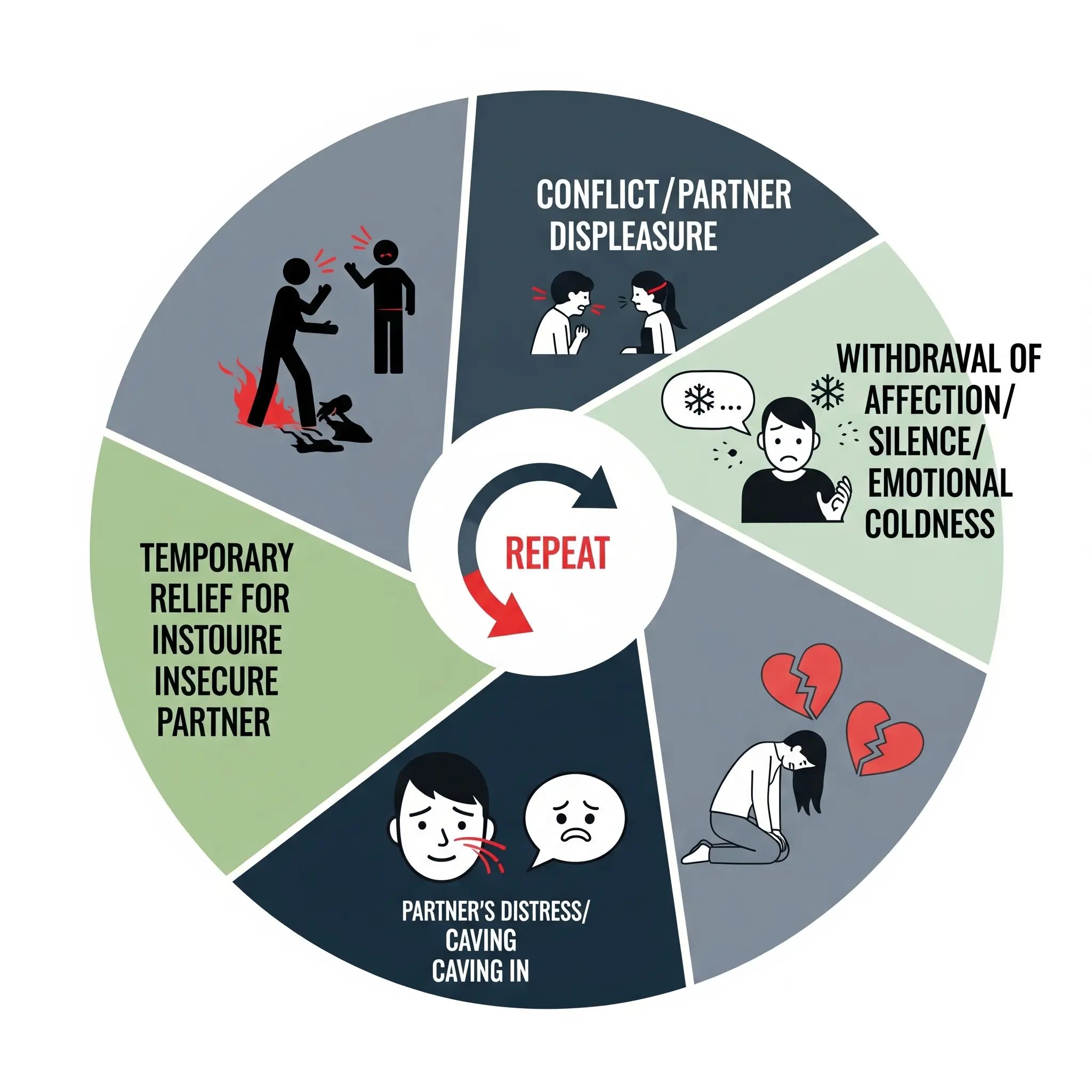
Why this is the most overlooked sign: Unlike obvious manipulation tactics, affection withdrawal appears as genuine emotional processing. Your partner might claim they “need time to think” or they’re “just upset.” What makes this deceptive is the pattern: affection returns only when you’ve apologized, changed your behavior, or provided sufficient reassurance.
This behavior, called “intermittent reinforcement” in psychology, is one of the most effective control mechanisms in relationships. The unpredictability of when warmth returns keeps partners in a constant state of anxiety, trying to earn back affection.
How to recognize the pattern:
- Affection disappears after you do something they dislike
- They become loving again once you’ve “made up for it”
- You find yourself walking on eggshells to avoid triggering withdrawal
- They deny withdrawing or claim you’re “too sensitive”
- The silent treatment lasts until you meet their unspoken demands
- Physical affection, communication, or emotional availability becomes a reward/punishment system
The psychological damage: Partners subjected to affection withdrawal develop anxiety disorders and lose their sense of security while also developing overthinking patterns. You learn that love is conditional on perfect behavior, creating a trauma bond rather than genuine intimacy. Research shows this pattern predicts relationship failure and individual mental health decline.
Why insecure people use this tactic: Withdrawing affection gives them a sense of control and power when they feel vulnerable. It’s a defense mechanism protecting them from potential rejection by rejecting you first. They create the distance they fear to manage the anxiety of you potentially leaving.
⚠️ Warning Sign: If you’re constantly walking on eggshells trying to avoid triggering your partner’s withdrawal, this pattern has crossed into emotional manipulation. Take the free assessment to understand if you’re experiencing healthy relationship dynamics or emotional abuse.
8. They Sabotage Your Success or Minimize Your Achievements
You get a promotion and your partner focuses on the increased work hours instead of celebrating. You lose weight and they comment that you’re “becoming obsessed.” Your achievements make them uncomfortable, and they subtly destabilize your confidence.
Why this reveals insecurity: Secure partners celebrate your growth because they don’t view it as threatening. Insecure partners see your success as evidence you’re outgrowing them or will find better options. They feel inadequate by comparison, so they minimize your achievements to protect their fragile self-esteem.
This behavior, studied as “interpersonal jealousy” and “comparative inadequacy” in relationship research, damages both individuals. The achieving partner loses support and validation, while the insecure partner’s behavior confirms their own inadequacy fears.
Subtle sabotage tactics:
- Picking fights before important events to drain your energy
- Criticizing your appearance when you’re feeling confident
- Downplaying accomplishments: “Anyone could do that”
- Creating crises that require your attention during your success moments
- Reminding you of past failures when you’re succeeding
- Suggesting your success makes you “different” or “changed”
The comparative inadequacy response: “Now that you’re [successful thing], you probably think you’re too good for me.” They make your achievement about their insecurity rather than your accomplishment. This manipulation forces you to reassure them instead of enjoying your success.
9. They Need Constant Reassurance Despite Your Consistency
You tell them you love them daily. You show affection constantly. You’ve given them no reason to doubt your feelings. Yet they still ask “Do you love me?” multiple times a day and seem sincerely anxious waiting for your response.
Why this reveals insecurity: This reassurance-seeking behavior, called “excessive reassurance seeking” (ERS) in clinical psychology, indicates the person cannot internalize evidence of being loved. No amount of reassurance creates lasting security because their insecurity stems from internal beliefs about unworthiness, not your actions.
Research published in the Journal of Social and Personal Relationships (2019) found that excessive reassurance seeking predicts relationship decline. Partners become exhausted providing validation that never satisfies the underlying need.
What excessive reassurance looks like:
- Asking “Do you love me?” or variations multiple times daily
- Needing you to prove your love through specific actions
- Questioning your feelings after small disagreements
- Interpreting normal moods as evidence of lost love
- Requiring constant physical touch or communication
- Getting anxious when you’re busy and not immediately responsive
Why reassurance doesn’t work: Each time you provide reassurance, you temporarily reduce their anxiety. This creates a reinforcement cycle where they learn that asking relieves discomfort, so they ask more frequently. The real issue – their core belief about being unlovable – never gets addressed.
The relationship toll: You feel like nothing you do is enough. The pressure to constantly manage their emotional state becomes exhausting. Resentment builds as your consistent love seems invisible to them. The relationship becomes about anxiety management rather than genuine connection.
10. They Have Extreme Reactions to Normal Relationship Challenges
You need to reschedule a date due to work obligations and they interpret it as rejection. You have a minor disagreement and they threaten to end the relationship. Small bumps in the road trigger catastrophic thinking and disproportionate emotional responses.
Why this reveals insecurity: These extreme reactions reflect fragile relationship security. Insecure individuals lack resilience when facing normal relationship challenges because their attachment foundation is shaky. Small issues feel existential because they confirm their core fear: the relationship is always on the verge of ending.
This behavior stems from what attachment researchers call “hyperactivating strategies” – the anxious person’s nervous system treats minor relationship friction as major threats requiring immediate, intense responses.
Examples of disproportionate reactions:
- Threatening breakup during minor arguments
- Days of emotional shutdown after you need alone time
- Accusations of not caring when you’re busy or distracted
- Dramatic declarations after small disappointments: “This proves you don’t love me”
- Physical symptoms (panic attacks, crying) in response to normal relationship boundaries
The catastrophic thinking pattern: Their mind immediately jumps to worst-case scenarios: “They canceled our date” becomes “They’re losing interest” becomes “They’re going to leave me” becomes “I’ll be alone forever.” This cognitive distortion turns manageable situations into relationship crises.
How this impacts partners: You learn to hide normal needs (time alone, rescheduling plans, disagreements) to avoid their extreme reactions. You become responsible for managing their emotional regulation. The relationship feels fragile and high-stakes rather than secure and resilient.
Understanding the Root: Why People Develop Relationship Insecurity
These 10 behaviors don’t appear randomly. They stem from psychological patterns developed through past experiences:
Attachment Theory and Childhood Experiences
Research by Dr. John Bowlby on attachment theory shows that early relationships with caregivers create templates for adult romantic connections. Inconsistent caregiving, emotional neglect, or childhood trauma produces anxious attachment styles where love feels unpredictable and dangerous.
How childhood shapes adult insecurity:
- Inconsistent parental affection teaches love is unreliable
- Emotional neglect creates beliefs about being unworthy of attention
- Childhood criticism builds core inadequacy beliefs
- Witnessing unstable relationships normalizes relationship anxiety
Past Relationship Trauma
Previous experiences of betrayal, abandonment, or emotional abuse create hypervigilance in new relationships. The brain learned that trust equals pain, so it constantly scans for threats even with trustworthy partners.
Trauma responses fueling current insecurity:
- Projecting past partner behaviors onto current partner
- Expecting history to repeat itself
- Inability to trust despite current partner’s consistency
- Triggered responses to situations resembling past betrayals
Low Self-Esteem and Core Unworthiness Beliefs
When someone believes they’re fundamentally damaged, they assume partners will eventually discover this and leave. This core unworthiness belief drives constant anxiety about being “found out” and abandoned.
Scientific Understanding of Relationship Insecurity
Research provides insight into why insecurity develops and persists:
Attachment Theory Research
Dr. John Bowlby’s attachment theory demonstrates that early caregiver relationships create internal working models affecting adult romantic bonds. Studies show 50-60% of adults have secure attachment styles, while 20% show anxious attachment (relationship insecurity) and 25% show avoidant attachment.
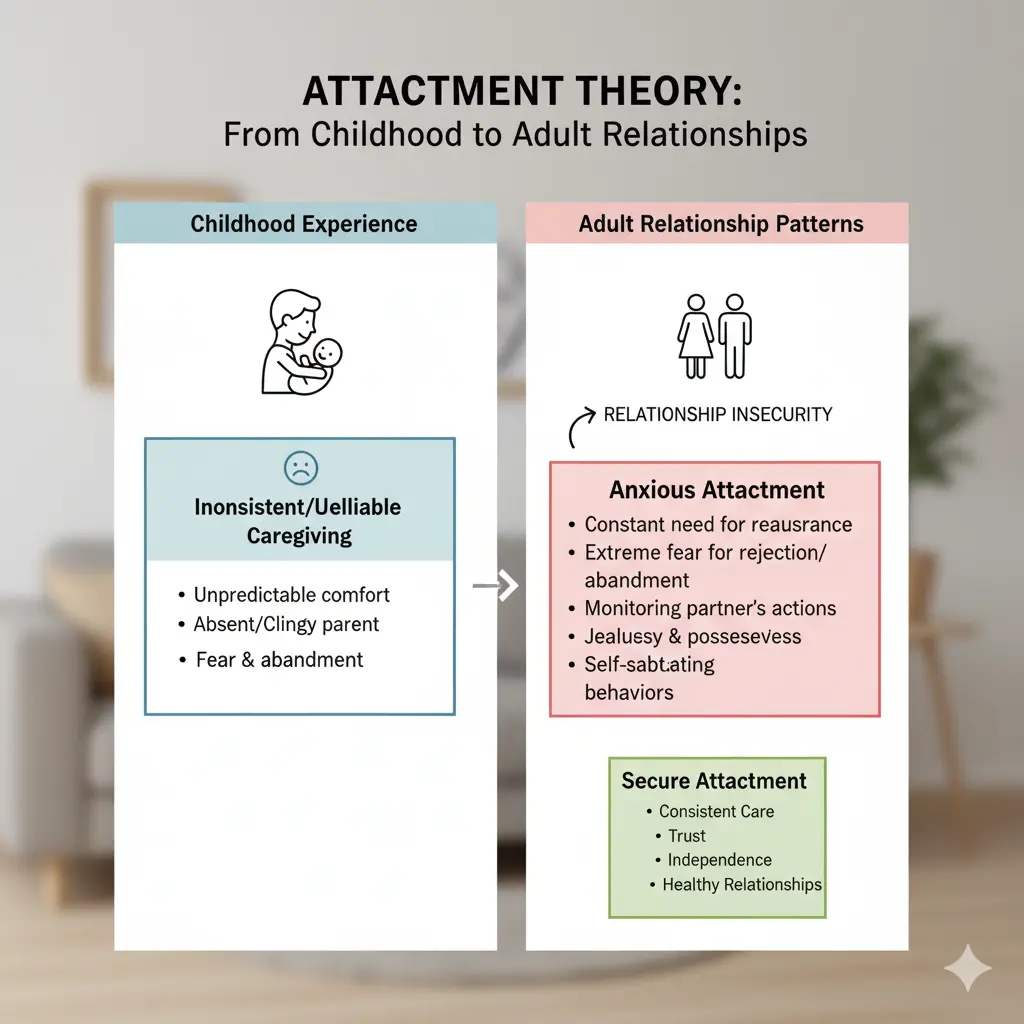
Anxious attachment and insecurity: Research published in the Journal of Personality and Social Psychology (2019) found that anxiously attached individuals experience heightened activation in brain regions associated with threat detection when viewing images of their partners, explaining the constant vigilance characteristic of relationship insecurity.
Cognitive Distortions in Relationships
Cognitive behavioral research identifies specific thought patterns that maintain relationship insecurity:
Common cognitive distortions:
- Mind reading: Assuming you know your partner’s thoughts without evidence
- Catastrophizing: Jumping to worst-case scenarios from minor events
- Black-and-white thinking: Viewing relationship as either perfect or doomed
- Emotional reasoning: Believing feelings equal facts (“I feel unloved, therefore I am unloved”)
A 2020 study in Cognitive Therapy and Research found that relationship-focused cognitive behavioral therapy reduced insecurity symptoms by 60% over 12 weeks by addressing these distortion patterns.
External research from the American Psychological Association on attachment and relationships supports structured approaches to addressing relationship anxiety through therapy and self-awareness practices.
How to Deal with Insecurity in a Relationship
Overcoming insecurity requires consistent practice and self-compassion. Here’s your action plan:
For the Insecure Partner: Taking Ownership
1. Acknowledge the pattern without shame Recognizing insecurity isn’t about self-criticism. It’s the first step toward healing. Your behaviors make sense given your history, but they’re now your responsibility to address.
2. Seek individual therapy Professional support helps you process childhood wounds, past relationship trauma, and build secure self-worth. Attachment-focused therapy, EMDR for trauma, and cognitive behavioral therapy address the root causes.
3. Develop self-soothing skills Learn to manage anxiety without relying on your partner for constant regulation. Practice grounding techniques, mindfulness, and distress tolerance when insecurity spikes.
4. Challenge cognitive distortions When catastrophic thoughts arise (“They’re going to leave”), test them against evidence. Track how often your fears come true versus how often they’re false alarms.
5. Build independence Cultivate identity, interests, and self-worth outside the relationship. The more complete you feel alone, the less desperately you need your partner to provide security.
For Partners of Insecure Individuals: Setting Healthy Boundaries
1. Provide reasonable reassurance without enabling “I love you and I’m committed to working through this together. I’ll tell you once today that I love you, and I need you to practice trusting that rather than asking again.”
2. Don’t accept emotional manipulation Affection withdrawal, dramatic reactions, and testing behaviors require clear boundaries: “I understand you’re anxious, but I won’t accept being punished through silence. Let’s talk when you’re ready to communicate directly.”
3. Encourage professional help “I care about you and want this relationship to work. Your insecurity is affecting both of us. Would you be willing to see a therapist to work on these patterns?”
4. Maintain your own boundaries and needs Don’t abandon friendships, career goals, or personal time to manage their anxiety. Healthy relationships allow both people autonomy and growth.
5. Recognize when insecurity becomes abuse Monitoring, isolation, punishment through affection withdrawal, and extreme control cross from insecurity into emotional abuse. If your partner refuses to address their behavior or it escalates, prioritize your safety and wellbeing.
Communication Strategies
Opening the conversation: “I’ve noticed some patterns in how we relate to each other. I want to talk about them because I care about our relationship’s health.”
Taking ownership: “I realize I’ve been asking for a lot of reassurance. This is about my own anxiety, not anything you’ve done wrong. I’m going to work on managing this differently.”
Setting collaborative goals: “Let’s work together on building more security. What would help you feel more confident in us? What do I need from you to feel respected and supported?”
Interactive Assessment: Are You Insecure or Just Cautious?
Not every relationship concern indicates problematic insecurity. Use this quick self-check:
Frequently Asked Questions
How can you tell if someone is secretly insecure?
You notice insecurity when a person needs repeated reassurance, watches your reactions closely, or worries about being judged. They hide their feelings yet overthink simple moments. Their confidence drops during small conflicts and they struggle to trust their own worth.
How does an insecure person act?
They read too much into comments, fear being replaced, and check for signs that you are upset. They may hold back their needs or over explain everything. Their nervous behavior often comes from past experiences that made them doubt themselves.
What behaviors would show insecure attachment?
Insecure attachment appears when someone pulls close fast then withdraws suddenly. They worry about being left, react strongly to small changes, and feel unsure during disagreements. Their patterns come from earlier relationships that shaped how safe they feel with others.
What are the signs of an insecure partner?
An insecure partner seeks constant reassurance, checks your tone for hidden meaning, and gets unsettled when plans shift. They may worry about losing you and need extra clarity. Their behavior often softens when they feel steady and understood.
Is insecurity in a relationship normal?
Occasional insecurity is normal, especially early in relationships or during stressful life transitions. Problematic insecurity involves persistent patterns that damage trust and autonomy despite partner consistency and reassurance
Can a relationship survive if one person is very insecure?
Yes, if the insecure person takes ownership and commits to healing work. Relationships fail when insecurity goes unaddressed or the insecure person blames their partner rather than addressing their own patterns.
How do I stop being insecure in my relationship?
Start with individual therapy to address root causes. Practice self-soothing techniques when anxiety arises. Challenge catastrophic thoughts with evidence. Build self-worth independent of your relationship. Communicate needs directly rather than through testing or manipulation.
Your Next Step: Stop the Cycle Before It’s Too Late
Right now, you have clarity. You recognize the patterns. You see the behaviors for what they are.
But here’s what happens next if you don’t act: Tomorrow, you’ll rationalize them. You’ll tell yourself you’re overreacting. The behaviors will continue, and you’ll slowly lose yourself trying to manage someone else’s anxiety. Six months from now, you won’t recognize your relationship or yourself in it.
Don’t let that happen.
Download our free Relationship Insecurity Assessment right now – not later, not after you “think about it” – because the patterns you identified today are already affecting your mental health, your boundaries, and your future. This 10-minute assessment reveals:
- Your specific insecurity patterns (yours or your partner’s)
- The childhood or trauma wounds driving current behaviors
- Personalized strategies for your exact situation
- Clear action steps you implement today, not someday
Here’s the truth most relationship articles won’t tell you: Awareness doesn’t create change. Action does. You’ve spent the last 15 minutes reading about these patterns because part of you knows something needs to shift. Trust that instinct.
The assessment includes:
- Attachment style identification quiz
- Communication scripts for tonight’s conversation
- Red flag vs healing sign checklist
- When to stay vs when to leave decision framework
Get the Relationship Insecurity Assessment now and start building the secure, trusting connection you deserve – or give yourself permission to leave a relationship that’s damaging your mental health.
The relationship you want is possible. But only if you stop waiting for change to happen and start creating it.
“Six months from now, you’ll wish you started today.”