

Table of Contents
Some days hit you like a freight train before you’ve even finished your morning coffee. Your phone buzzes with urgent texts, your to-do list stretches by the hour, and you feel like you’re drowning in everyday chaos. If this sounds familiar, you’re not alone in wondering how to stay productive during daily struggles when life is tough.
The struggle is real: Between work deadlines, family errands, unexpected emergencies, and the constant pull of digital disruptions, staying productive when overwhelmed feels impossible when life gets messy. You want to accomplish meaningful tasks, but your energy feels scattered and your focus keeps slipping away.
Here’s what you’ll learn: Whether you’re a student, parent or remote worker, learning how to stay productive starts with understanding your energy patterns and working with them instead of against them. This guide offers you practical, science-backed strategies and best techniques to stay productive during daily struggles without burning yourself out. You’ll master the 3-Energy Plan system, learn five 2-minute reset rituals, explore popular productivity frameworks, and get access to a free Daily Focus Survival Tracker to help you navigate even your toughest days on how to stay productive during daily struggles.
You don’t have to choose between taking care of yourself and getting things done.
How to Stay Productive: The 3-Energy Plan System
Your brain wasn’t designed to handle the constant stream of decisions and distractions modern life throws at you. When you feel overwhelmed, your prefrontal cortex (the part responsible for executive function) becomes less effective at prioritizing tasks and keeping focus.
This creates a paradox: the days when you need to be most effective are often the days when your mental resources feel most worn-out. Add in sleep deprivation, stress hormones, and information overload, and it’s no wonder your usual systems crumble.
Why do people struggle with productivity? The answer lies in cognitive overload. Your working memory shrinks under stress, making it harder to process information and make decisions. This explains why simple tasks feel overwhelming on hard days.
The good news? You don’t need perfect conditions to get things done. Small, calculated actions work better than waiting for motivation to strike or trying to power through with sheer willpower.
How to Stay Productive During Daily Struggles: Tips and Strategies

Your brain wasn’t designed to handle the constant stream of decisions and distractions modern life throws at you. When you feel overwhelmed, your prefrontal cortex (the part responsible for executive function) becomes less effective at prioritizing tasks and keeping focus.
This creates a paradox: the days when you need to be most effective are often the days when your mental resources feel most worn-out. Add in sleep deprivation, stress hormones, and information overload, and it’s no wonder your usual systems crumble.
Why do people struggle with productivity? The answer lies in cognitive overload. Your working memory shrinks under stress, making it harder to process information and make decisions. This explains why simple tasks feel overwhelming on hard days.
The good news? You don’t need perfect conditions to get things done. Small, calculated actions work better than waiting for motivation to strike or trying to power through with sheer willpower.
How to Stay Productive: The 3-Energy Plan System
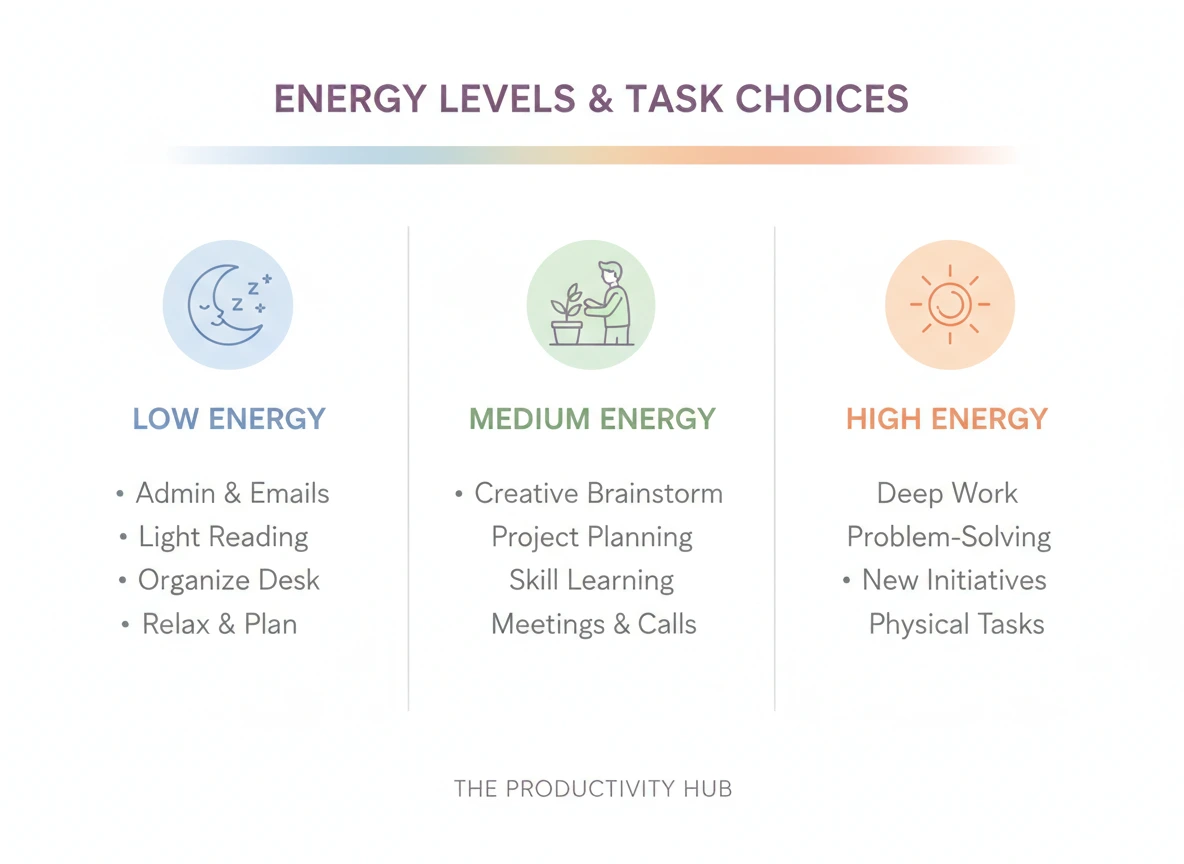
How to Stay Productive During Daily Struggles
Instead of fighting against your current energy level, work with it. This energy-based approach helps you boost productivity when overwhelmed by choosing the right tasks for your mental state.
Low Energy Productivity Tips: Focus on 5-Minute Wins

When you feel mentally drained, knowing how to stay productive means forgetting about big projects. Instead, aim for small victories that build momentum and keep you moving forward:
Starter Tasks (2-3 minutes each):
- Reply to one important email
- Clear your desk surface
- Write down three priorities for tomorrow
- Sort laundry or wash dishes
- Review your calendar for the next day
Why this works: Completing small tasks triggers a dopamine release, which naturally boosts motivation for the next action. Research from Harvard Business School shows that small wins create a cascade effect, making you more likely to tackle additional tasks.
Medium Energy Days: Use Time-Boxing Techniques
Learning how to stay productive during medium energy days requires structure. When you have moderate focus, time-boxing techniques help maximize your workflow:
The Modified Pomodoro Technique:
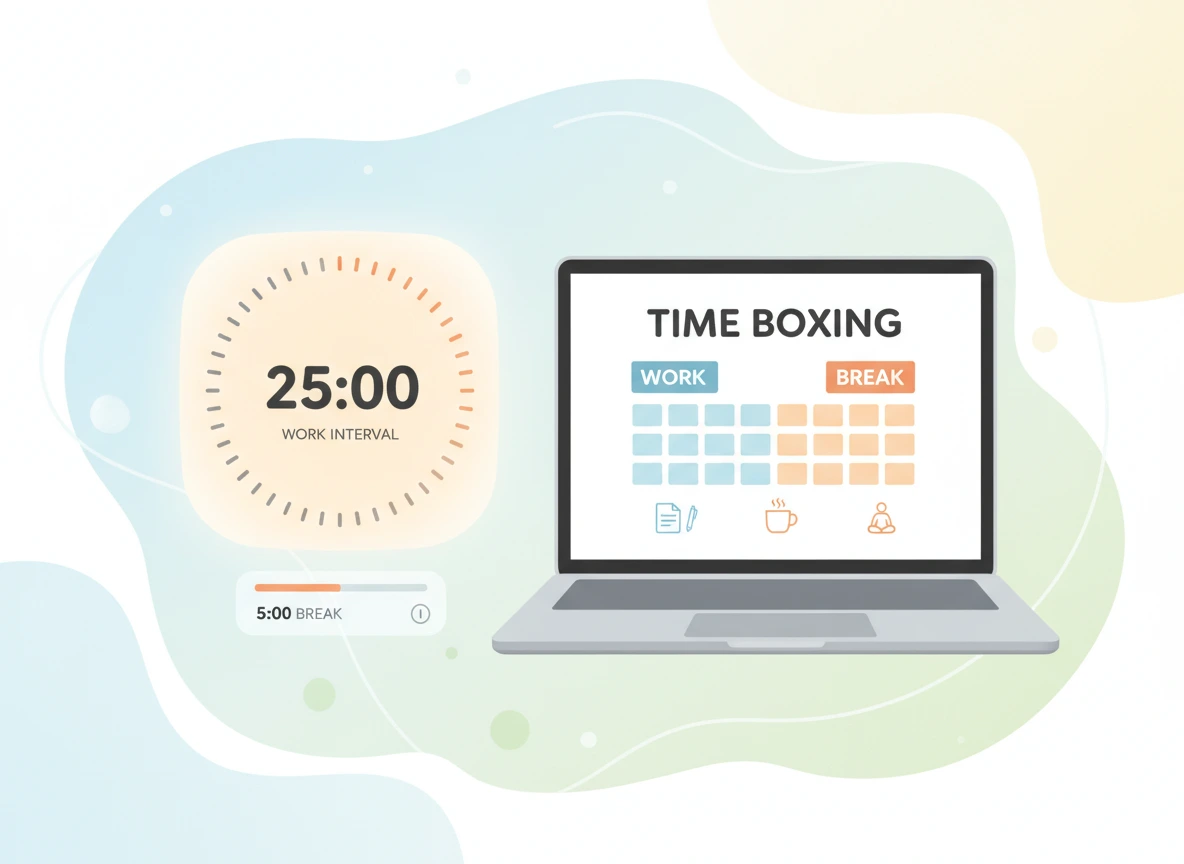
- Work for 25 minutes on one task
- Take a 5-minute break
- After 2-3 cycles, take a 15-30 minute break
- Adjust timing based on your attention span
Quick Task Triage (Eisenhower Matrix):
- Urgent + Important: Do now
- Important + Not Urgent: Schedule
- Urgent + Not Important: Delegate or minimize
- Neither: Eliminate
High Energy Deep Work: Maximize Your Peak Hours

When you feel focused and energized, understanding how to stay productive means protecting this precious time. Use these proven strategies:
Batching Strategy:
- Group similar tasks together (all emails, all phone calls, all creative work)
- Set specific time blocks for deep work
- Use website blockers during focused sessions
- Create boundaries around interruptions
Time Boundary Technique:
- Choose your most important task
- Set a timer for 90 minutes
- Work without checking messages or social media
- Take a proper break when the timer ends
Popular Productivity Frameworks for Messy Days
These simple frameworks help you stay productive when life is stressful by giving you clear structure when your mind feels chaotic.
What is the 3-3-3 Rule for Productivity?
This rule helps you focus during chaos by limiting your daily goals:
- Choose 3 important tasks to complete
- Schedule 3 urgent tasks for immediate attention
- Do 3 maintenance tasks to keep life running smoothly
Why it works: Your brain handles three items better than long lists. When overwhelmed, this rule prevents decision fatigue while ensuring progress on what matters most. This is one of the simplest ways to stay productive because your brain handles three items better than long lists. This is one of the best techniques to stay productive because your brain handles three items better than long lists.
What is the 1-3-5 Rule for Productivity?
Perfect for productivity when drained, this system recognizes your limited capacity:
- Pick 1 big thing to accomplish
- Choose 3 medium tasks
- Complete 5 small tasks
Best for: Days when you feel scattered but want to maintain momentum across different areas of your life.
What are the 4 P’s of Productivity?
This framework addresses both actions and mindset:
- Priority: What needs attention first?
- Progress: What small step moves you forward?
- Purpose: Why does this task matter?
- Presence: How do you stay focused right now?
Use when: You feel unmotivated or question whether your efforts matter.
🔥 Need a way to track your resets? Download the free Daily Focus Survival Tracker now.
The Psychology of Productivity Struggles
Understanding how to stay productive requires knowing why you struggle. Accepting the psychology behind productivity helps you choose better strategies. Accepting why you struggle helps you choose better strategies. Here’s what science tells us about staying on track on bad days.
Dopamine and Small Wins Motivation
Your brain releases dopamine when you complete tasks, creating natural motivation for the next action. This enlightens why simple daily productivity habits work better than waiting for major accomplishments.
Harvard research shows: People who track small daily wins report 76% higher engagement and motivation compared to those focusing only on big goals.
Cognitive Overload and Focus
When stressed, your working memory shrinks. You literally process less information efficiently. This is why productivity boosters for mental health focus on reducing decisions rather than adding more tasks.
Solution: Use external systems (lists, timers, trackers) to store information your brain would normally hold.
Productivity Dysmorphia
This term describes the disconnect between how much you achieve and how productive you feel. You might complete several tasks but still feel like you “did nothing” because they weren’t on your original plan.
Combat this by: Tracking all activities, not just planned ones. Your brain needs evidence of your efforts to maintain motivation.
Five 2-Minute Reset Rituals for Focus
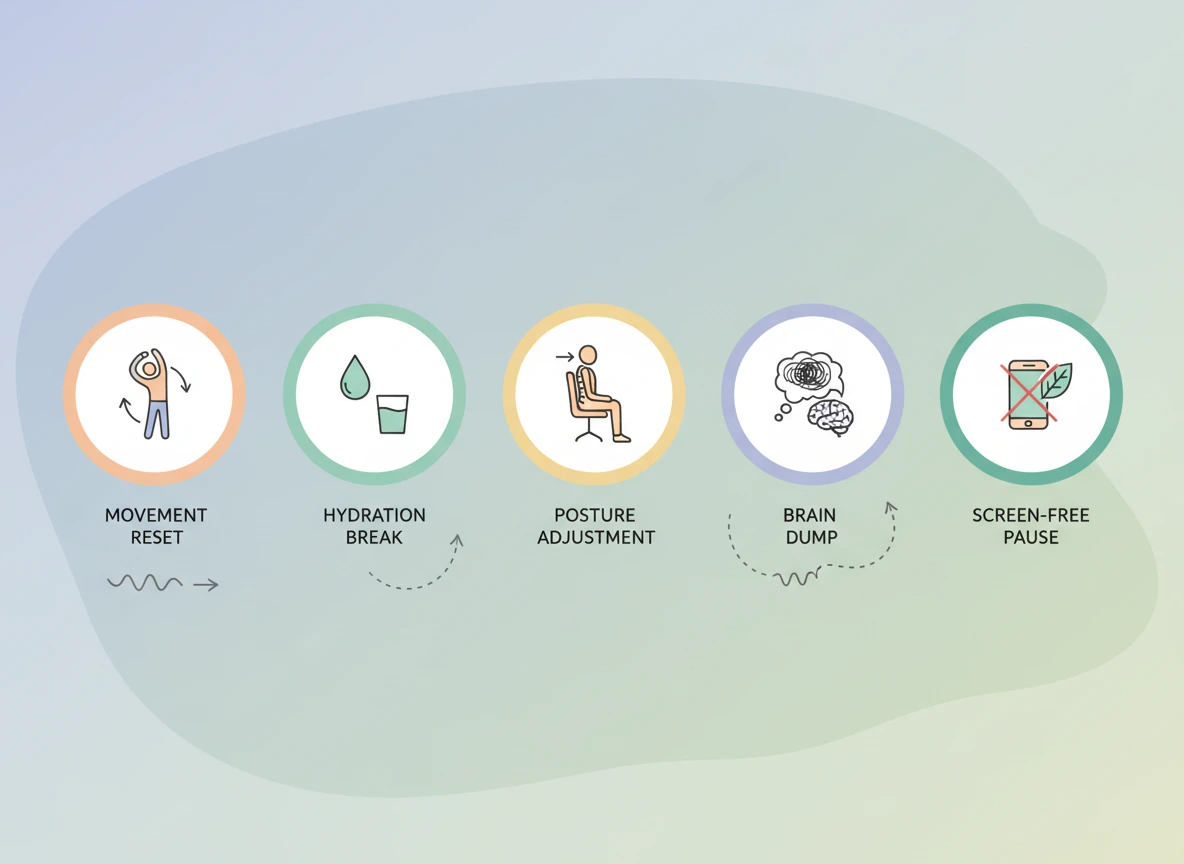
If you want to know how to stay productive throughout the day, these micro-habits serve as circuit breakers when stress builds up.
1. The Movement Reset (2 minutes)
Physical movement shifts your mental state faster than almost anything else. Even when you’re stuck at a desk, small movements count:
- Walk to the end of your hallway and back
- Do 10 jumping jacks or push-ups
- Stretch your neck, shoulders, and wrists
- Step outside for fresh air
Why it helps: Movement increases blood flow to the brain and releases tension stored in your muscles.
2. The Hydration Ritual (3 minutes)
Dehydration affects cognitive function, but most people don’t drink enough water during stressful periods.
Create a mindful hydration break:
- Fill a large glass with water
- Add lemon, cucumber, or mint if you want
- Drink slowly while focusing on the taste
- Use this time to check in with your body
3. The Posture Reset (1 minute)
Poor posture contributes to fatigue and reduces confidence. This quick adjustment makes an immediate difference:
- Roll your shoulders back and down
- Elongate your spine
- Relax your jaw and facial muscles
- Take three deep breaths
4. The Brain Dump (5 minutes)
When your mind feels cluttered, external storage helps:
- Grab paper or open a notes app
- Write down everything swirling in your head
- Don’t organize or prioritize yet
- Just get thoughts out of your brain and onto paper
Pro tip: Keep a small notebook handy for these brain dumps throughout the day.
5. The Screen-Free Pause (3 minutes)
Digital distractions affect focus more than most people understand. Regular breaks from screens help reset your attention:
- Look out a window at something far away
- Focus on sounds around you
- Notice five things you see, four things you hear, three things you touch
- Practice box breathing (4 counts in, 4 hold, 4 out, 4 hold)
Staying Productive in Different Life Contexts
How to stay productive looks different for everyone. Your challenges vary based on your daily responsibilities. Here are targeted strategies for common situations:
Students: Managing Study Overwhelm
Quick productivity hacks for students:
Students wondering how to stay productive during exam season should focus on these essentials:
- Use the “2-minute rule”: if something takes less than 2 minutes, do it now
- Create subject-specific study playlists
- Study in 25-minute focused bursts
- Keep healthy snacks and water nearby
- Use apps like Forest or Freedom to block distracting websites
When you feel behind: Focus on understanding key concepts rather than trying to catch up on everything. Quality trumps quantity when time is limited.
Parents: Balancing Household and Childcare
Realistic productivity hacks for parents:
- Prep the night before (lay out clothes, pack lunches, charge devices)
- Use nap times or quiet time for your most important task
- Involve kids in age-appropriate household tasks
- Lower perfectionist standards on busy days
- Create “stations” around your home for different activities
Remember: You’re modeling resilience for your children. They learn more from watching you adapt than from seeing you stress about unfinished tasks.
Remote Workers: Fighting Isolation and Boundary Issues
Structure for productivity hacks for remote workers:
- Create a dedicated workspace, even if it’s small
- Use video calls for important conversations
- Take real lunch breaks away from your computer
- Set clear start and stop times for work
- Schedule social interactions throughout the week
Boundary management: Physical separation between work and home spaces helps your brain transition between different roles.
Homemakers: Managing Endless Household Tasks
Systems that simplify productivity tips for homemakers:
- Assign specific days for different types of cleaning
- Use timers to limit how long you spend on each task
- Create “15-minute pickup” routines
- Batch similar tasks together
- Accept some things don’t need to be perfect
Productivity Voices from Real People
Here’s what people dealing with daily struggles share about staying focused during chaos:
“I stopped trying to do everything perfectly and started celebrating tiny wins. Folding one load of laundry or answering three emails counts as progress when you’re overwhelmed.” – Sarah, working mom of two
“The brain dump changed my life. I write everything down for 5 minutes each morning, then pick just three things to focus on. My anxiety dropped because I’m not constantly trying to remember stuff.” – Mike, graduate student
These real experiences highlight how simple daily habits create more impact than complex systems when life feels chaotic.
Your Free Resource: Daily Focus Survival Tracker
To help you implement these strategies, I’ve created a comprehensive Daily Focus Survival Tracker PDF you download and use immediately.
What’s included:
- Energy level assessment template (rate yourself 1-10 each morning)
- Task categories based on energy requirements
- 5-minute reset ritual checklist
- Daily wins tracker (celebrate small accomplishments)
- Weekly reflection prompts for productivity
- Small wins checklist for motivation
- Brain dump template printable
How to use it:
- Print one copy or use it digitally on your tablet
- Start each day by rating your energy level
- Choose tasks that match your current capacity
- Track which reset rituals work best for you
- Note patterns over time to improve your system
The tracker helps you build self-awareness about your patterns and creates accountability without adding pressure.
Frequently Asked Questions
What is the 3-3-3 rule for productivity?
The 3-3-3 rule helps you focus during chaos by limiting daily goals: choose 3 important tasks to complete, 3 urgent tasks for immediate attention, and 3 maintenance tasks to keep life running smoothly. Your brain handles three items better than long lists.
How to stay productive 98% of every day?
You stay productive most of the day by keeping your energy steady, planning small tasks, and removing distractions. Break work into short focused sessions, rest between them, eat simple balanced meals, and review your priorities each morning so your mind stays clear and consistent.
What is the 7 8 9 rule of time management?
The 7 8 9 rule helps you plan your day with a simple rhythm. You use seven hours for focused work, eight hours for sleep, and nine smaller blocks for breaks, meals, and personal tasks. This balance keeps your energy steady and your schedule clear.
What are the 7 most common causes of low productivity?
Low productivity often comes from low energy, unclear priorities, constant multitasking, poor sleep, stress, cluttered spaces, and heavy phone use. These factors drain focus and slow your mind. When you manage them early, your work becomes easier and your day feels lighter.
What are the 4 P’s of productivity?
The 4 P’s framework addresses actions and mindset: Priority (what needs attention first), Progress (what small step moves you forward), Purpose (why this task matters), and Presence (how to stay focused right now). Use this when you feel unmotivated or question whether your efforts matter.
How do I stay motivated when life is overwhelming?
Motivation follows action, not the other way around. Instead of waiting to feel motivated, commit to one tiny action. Focus on systems rather than outcomes, celebrate small wins consistently, and remember tough times are temporary. Your current struggle doesn’t define your entire life or abilities.
Why do people struggle with productivity?
Common causes include cognitive overload, perfectionism, unclear priorities, energy mismanagement, digital distractions, and lack of systems. Understanding your specific struggle helps you choose the right strategies rather than trying random productivity hacks.
Your Next Steps: Consistency Over Perfection
Learning how to stay productive during daily struggles isn’t about perfection. Knowing how to stay productive means showing up consistently with small, intentional actions when life gets messy.
Key takeaways to remember:
- Match your tasks to your energy level instead of fighting against it
- Use 2-5 minute reset rituals to shift your mental state quickly
- Focus on progress, not perfection
- Celebrate small wins to build momentum
- Adjust strategies based on your life context
The goal isn’t to eliminate life’s challenges but to develop tools that help you navigate them with grace and effectiveness. Your Daily Focus Survival Tracker will help you identify which strategies work best for your unique situation.
Ready to take action? Download your free Daily Focus Survival Tracker and start with just one reset ritual today. Share this article with someone who might need these strategies, and explore our related guides on building sustainable self-care routines and maintaining healthy relationships during stressful periods.
Remember: every small step counts, especially when life feels overwhelming. You’ve got this.