
Table of Contents
If you want to know how to stop overthinking at night, you’re not alone. Millions struggle with racing thoughts when they should be sleeping. You’re lying in bed, drained from the day, but your mind refuses to rest. Racing thoughts about work deadlines, relationship conversations, and tomorrow’s to-do list keep you wide awake. Sound familiar? “I want to sleep but my brain won’t stop talking to itself.”
You’re not broken, and you’re not alone in dealing with a brain that won’t shut off at night. If you struggle to achieve a quiet mind before bed and need better sleep hygiene for anxiety, you’re in the right place. This guide shows you how to stop overthinking at night with step-by-step routines, calming scripts, and proven habits you can try tonight. These methods have helped thousands transform their bedtime from a mental battle into peaceful rest.
Key Takeaways
- Stop overthinking before bed by creating a designated worry window earlier in the evening
- Use physical relaxation techniques (4-7-8 breathing, progressive muscle relaxation) to calm your nervous system
- Build consistency with a bedtime relaxation routine your brain learns to identify
- If you wake at 3AM, get up instantly rather than lying in bed fighting thoughts
- Daytime habits like caffeine cutoff and stress processing prevent nighttime overthinking
- Professional support (CBT-I, therapy) complements these methods for persistent issues
Why Learning How to Stop Overthinking at Night Matters
Your brain isn’t trying to torment you. Racing thoughts at night happen for rational reasons. Throughout busy days, your mind stays focused on immediate tasks and diversions. When the world finally quiets down, all the stress, unfinished business, and worries you’ve pushed aside throughout the day suddenly surface.
Your cortisol levels, the stress hormone that’s naturally lower at night, can spike when anxiety takes over. Research from the American Psychological Association explains how stress hormones affect sleep quality. This generates an overactive mind at night that feels impossible to calm. When your nervous system is still in alert mode from daytime stress, your brain sees the quiet hours as prime time to process everything you didn’t handle during the day. Your mind processes emotions and memories more deeply when you’re tired and your defenses are down. Understanding this helps you work with your brain instead of fighting against it.
If you’re struggling with persistent sleep issues, learning to manage daily stress effectively during waking hours creates the foundation for peaceful nights. Many people find that addressing anxiety during the day significantly reduces nighttime rumination.
How to Stop Overthinking at Night: 7 Steps Quick Guide
1. Create a Worry Window — Set 20 minutes earlier in the evening for designated thinking time.
2. Brain Dump Before Sleep — Write down racing thoughts and worries to clear your mind.
3. Calm Your Body — Use 4-7-8 breathing or progressive muscle relaxation.
4. Establish Your Bedtime Relaxation Routine — Build consistency with calming activities.
5. Optimize Your Sleep Environment — Adjust temperature, lighting, and sound for calm.
6. Use Scripts to Calm Your Mind — Practice prepared phrases to redirect overthinking.
7. Handle 3AM Wake-Ups — Get up and remove yourself from bed if awake over 20 minutes.
Step 1: Create a Worry Window Before Bed
Summary: Set aside 20 minutes earlier in the evening as your designated thinking time. This teaches your brain that overthinking before bed has a specific time and place, not your pillow.
The worry window technique stops your brain from using bedtime as problem-solving time. Ideally schedule this 2-3 hours before sleep. This is one of the most effective ways to develop a calming bedtime routine that your mind recognizes and respects.
How to Set Up Your Worry Window:
- Choose a consistent time (like 7 PM if you sleep at 10 PM)
- Sit in a specific chair away from your bedroom
- Set a timer for 20 minutes
- Write down everything on your mind
- When the timer goes off, you’re done
How to Stop Overthinking at Night Using the Worry Window
The worry window is one of the most effective techniques for how to stop overthinking at night. When you designate specific thinking time earlier in the evening, your brain learns that bedtime is not problem-solving time.
Sample Journaling Prompts:
- What situations am I replaying in my head?
- What decisions do I need to make this week?
- What am I afraid will happen tomorrow?
- Which problems need action versus which ones I can’t control?
When bedtime arrives and your brain tries to rehash these topics, you can gently remind yourself: “I already gave this thought proper attention during my worry window. Right now is for rest.”
Try this tonight: Set your worry window for tomorrow and write down three things currently on your mind.
[Download the Worry Window checklist for your phone]
Step 2: Brain Dump or Journaling Routine
Summary: Keep a notebook beside your bed and write down racing thoughts immediately. This signals your brain that worries are captured and safe to release.
A brain dump before sleep clears your mental space and helps you achieve a quiet mind before bed. This isn’t about perfect writing or deep reflection. You’re simply getting thoughts out of your head and onto paper so your brain stops recycling them.
Quick Brain Dump Prompts:
- “Tomorrow I’ll handle…”
- “I’m grateful for…”
- “I release worry about…”
- “Three good things from today were…”
- “I give myself permission to rest because…”
The Two-Minute Rule: If something pops into your head that takes less than two minutes to write down, do it immediately. If it would take longer to solve, write “Address tomorrow” and move on. Your brain often creates mental loops because it fears forgetting important information. When you capture these thoughts on paper, you signal safety to your nervous system.
Try this tonight: Keep your notebook within arm’s reach and write down any worry that surfaces before bed.

Step 3: Calm Your Body to Calm Your Mind
Summary: Use the 4-7-8 breathing technique or progressive muscle relaxation to activate your parasympathetic nervous system. Harvard Health Publishing provides additional evidence on breathing techniques for relaxation. Physical calm creates mental calm.
Physical tension feeds mental tension. When your body relaxes, your mind follows.
Physical Techniques for How to Stop Overthinking at Night
Understanding how to stop overthinking at night includes recognizing the mind-body connection. When you calm your body through breathing or muscle relaxation, your mind follows naturally.
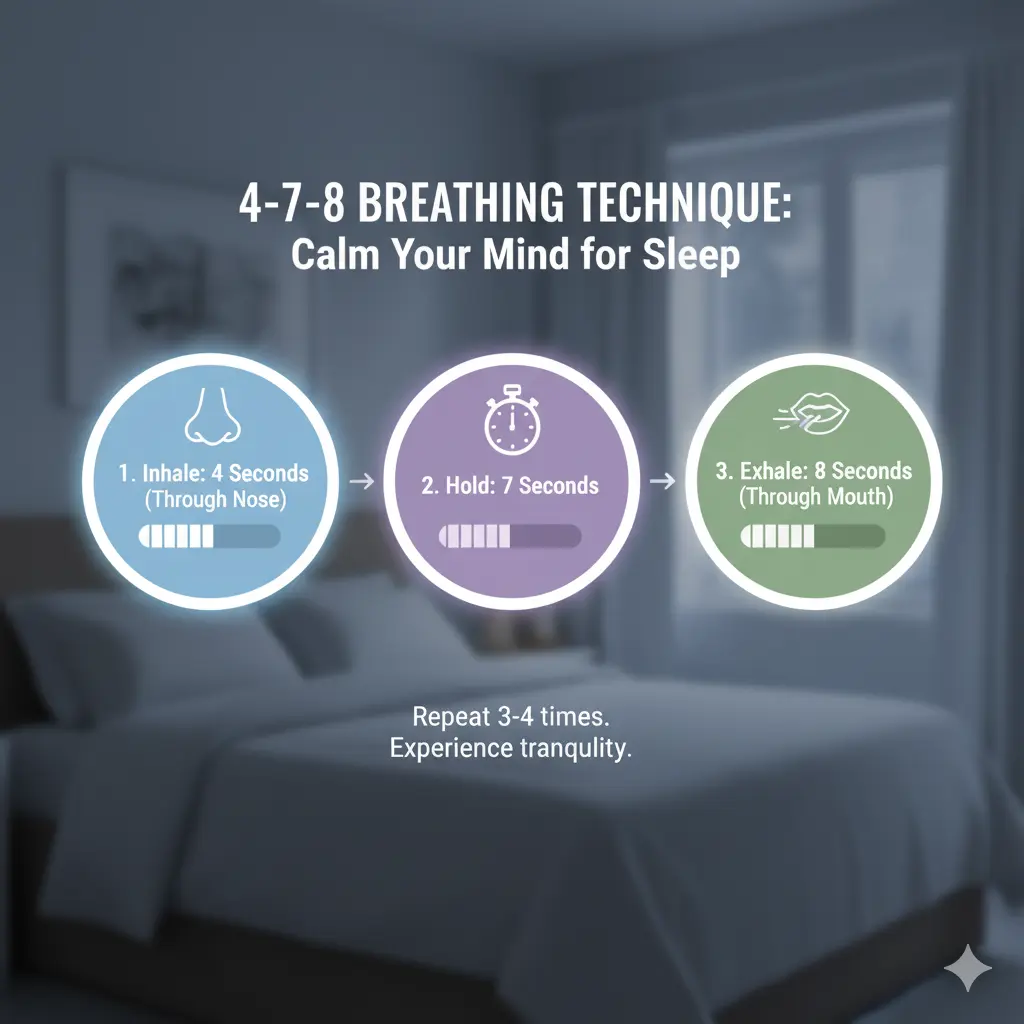
4-7-8 Breathing Technique (Step-by-Step):
- Exhale completely through your mouth
- Close your mouth and inhale through your nose for 4 counts
- Hold your breath for 7 counts
- Exhale through your mouth for 8 counts
- Repeat this cycle 3-4 times
Physical Techniques for How to Stop Overthinking at Night
Understanding how to stop overthinking at night includes recognizing the mind-body connection. When you calm your body through breathing or muscle relaxation, your mind follows naturally. These physical techniques interrupt the stress response and signal safety to your nervous system.
This breathing pattern activates your parasympathetic nervous system, telling your body it’s safe to rest. The extended exhale signals relaxation to your brain chemistry.
Progressive Muscle Relaxation (Quick Version):
- Start with your toes and tense for 5 seconds
- Release and notice relaxation
- Move up through calves, thighs, abdomen, arms, and face
- With each release, imagine stress leaving your body
- Finish with three deep breaths
Cognitive Shuffling (Optional): Visualize random, unrelated images for 10-15 seconds at a time (red apple, mailbox, cloud). This breaks the overthinking loop because your brain can’t maintain anxious thoughts while focusing on unrelated objects.
Try this tonight: Practice the 4-7-8 breathing technique three times before bed.
[Save this breathing exercise to your phone]
Step 4: Bedtime Relaxation Routine for a Quiet Mind Before Bed
Summary: Build a consistent 30-minute routine 1 hour before sleep. Your brain will learn to recognize these signals and produce sleep hormones automatically. The Sleep Foundation offers research-backed guidelines on sleep hygiene practices.
Consistency signals to your brain that sleep time approaches. Your bedtime relaxation routine doesn’t need to be complicated, but it should be calming and predictable. This establishes sleep hygiene for anxiety that your nervous system learns to recognize.
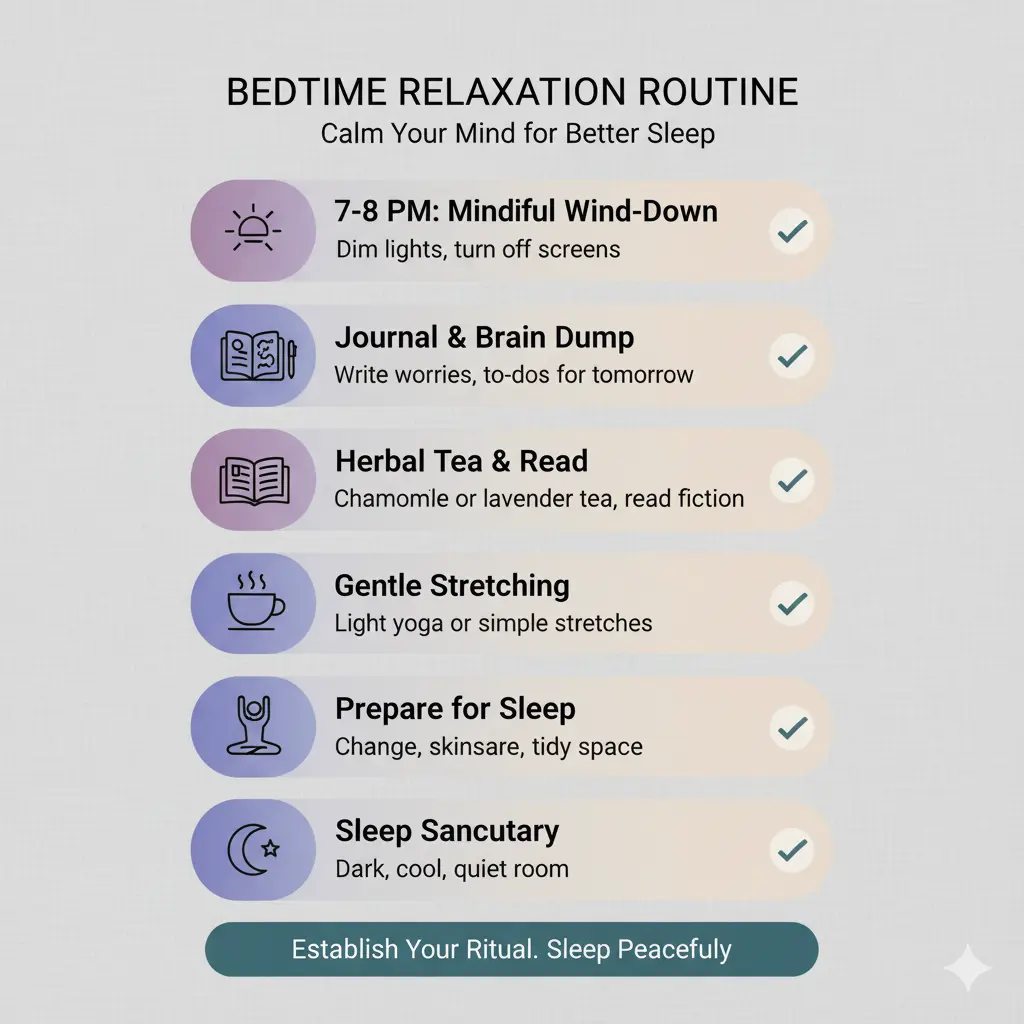
Sample Bedtime Relaxation Routine Checklist:
✓ Put devices away (1 hour before bed)
✓ Write in your journal (5 minutes)
✓ Do gentle stretches or yoga
✓ Dim the lights throughout your home
✓ Prepare herbal tea (chamomile or passionflower)
✓ Read fiction for 10-15 minutes
✓ Practice gratitude or breathing exercises
Building Your Routine:
- Start at the same time each night
- Choose activities you genuinely enjoy
- Make each step take 5-10 minutes max
- Prepare everything earlier in the day
- Be consistent but flexible
Your brain learns to associate these activities with approaching sleep, making the transition smoother over time. This becomes your anchor when racing thoughts try to take over.
Try this tonight: Choose three activities from the checklist and do them in order for 30 minutes.
[Print this checklist for your bedroom]
Step 5: Optimize Your Sleep Environment
Summary: Cool room (65-68°F), blackout curtains, white noise, comfortable bedding, and zero visual clutter. Your environment either supports sleep or sabotages it.
Small changes to your bedroom create big improvements in mental calm. When you reduce environmental stressors, your brain has fewer triggers for overthinking and insomnia.
Temperature: Keep your room 65-68°F (18-20°C). Cool temperatures promote deeper sleep and reduce restless thinking. Your body temperature naturally drops when sleeping, so a cool room supports this process.
Lighting: Use blackout curtains or an eye mask. Even small amounts of light interfere with melatonin production and keep your mind alert.
Sound: Use white noise, earplugs, or a fan to mask sudden noises. Consistent background sound prevents your brain from focusing on worries.
Bedding: Invest in comfortable pillows and quality sheets. Physical comfort reduces nighttime restlessness and helps your body feel safe.
Visual Space: Remove work materials, bills, or anything that reminds you of stress. Your sleep space should be a sanctuary, not an extension of your worries.
Think of your bedroom as a retreat from the world. Every element should support relaxation, not activate your nervous system. When your environment feels calm, your mind follows.
Step 6: Scripts to Calm Your Mind & Quiet Overthinking
Summary: When overthinking strikes, use prepared phrases to interrupt the thought loop. Practice these during calm moments so they’re automatic when you need them.
These calming scripts interrupt the thought loop and give your brain a new direction to travel. Scripts to calm your mind are like mental shortcuts that bypass the anxiety cycle.
Core Calming Scripts:
- “This thought can wait until morning when I’m fresh.”
- “Rest is productive. My brain needs sleep to work well tomorrow.”
- “I’ve done enough thinking for today. Now it’s time to recharge.”
- “My bed is for rest, not for solving problems.”
- “I trust that tomorrow-me will handle whatever comes up.”
Scripts for Specific Worries:
- Work: “I did my best today. Tomorrow I’ll tackle challenges with a rested mind.”
- Relationships: “This conversation will go better when we’re both well-rested.”
- Health: “My body is working to heal and restore itself while I sleep.”
- Finances: “Money stress won’t be solved tonight. Rest helps me think more clearly about solutions.”
- ADHD/Anxiety: “My brain works differently, and that’s okay. Right now, I’m choosing rest over problem-solving.”
Practice these phrases during calm moments so they’re easier to remember at night. Write them on a note card next to your bed for quick reference.
Try this tonight: Pick one script that resonates most and repeat it three times before bed.
[Download the Scripts to Calm Your Mind card]
Step 7: What to Do If You Wake Up at 3AM
Summary: If awake over 20 minutes, get up immediately. Staying in bed creates anxiety and associates your bedroom with wakefulness. Leave the bed, do something calming, return only when sleepy.
Middle-of-the-night overthinking feels intense because you’re tired. Fighting with racing thoughts at night while lying in bed usually makes them stronger.
The 3AM Rule:
If you’ve been awake for more than 20 minutes, get up. Staying in bed associates your bedroom with wakefulness and anxiety. This is the most important way to stop overthinking at 3am.
What to Do When You Get Up:
- Go to another room with dim lighting
- Sit in a comfortable chair (don’t lie down)
- Write your thoughts in a notebook for 5-10 minutes
- Do gentle stretches or breathing exercises
- Read something calming and non-stimulating
- Return to bed only when you feel sleepy
This removes the association between your bed and wakefulness. Most people fall back asleep within 20-30 minutes using this method.
Avoid:
- Checking your phone or the time
- Turning on bright lights
- Starting productive tasks
- Drinking caffeine or heavy snacks
- Getting frustrated with yourself
Remember that occasional middle-of-the-night wake-ups are normal. The goal isn’t to never wake up, but to handle it calmly when you do.
Stop Overthinking Relationships at Night
Relationship worries often intensify at bedtime because emotions run higher when you’re tired. Learning how to stop overthinking relationships at night protects both your sleep and your relationships.
Relationship Gratitude Practice:
Before bed, write down three things you appreciate about the person you’re worried about. This gratitude journal for sleep shifts your brain from problem-focused thinking to positive reflection.
Examples:
- “I’m grateful Sam listens when I’m stressed about work.”
- “I appreciate how Mom checks in on me even when she’s busy.”
- “I value that Chris makes me laugh during difficult times.”
Setting Boundaries:
Tell yourself: “I care about this relationship, which is why I want to approach any concerns with a well-rested mind tomorrow.” Late-night relationship analysis rarely leads to productive solutions.
Write this format instead: “Tomorrow I want to talk with [person] about [specific topic].” This gives you a plan without endless mental rehearsal.
Stop Overthinking Relationships at Night
What you do during the day directly affects nighttime peace. These core daytime habits create the foundation for better sleep. Start with just one habit this week.
Morning Movement — 10 minutes of walking or stretching regulates your nervous system for the entire day.
Afternoon Caffeine Cutoff — Stop caffeine after 2 PM. It stays in your system 6-8 hours and keeps you alert when you need to wind down.
Evening Tech Boundaries — Put devices away one hour before bed. Blue light and stimulating content interfere with melatonin production.
Consistent Sleep Schedule — Go to bed and wake at the same time daily, even weekends. This teaches your body when to produce sleep hormones.
For a comprehensive guide on how to manage stress throughout your day and prevent worries from accumulating, explore our full article on daytime habits. Small, consistent changes compound over time. After 2-3 weeks, these habits become automatic.
Try this tonight: Choose one daytime habit to start tomorrow.
When to Seek Extra Help
Sometimes overthinking at night persists despite your best efforts. This doesn’t mean you’re failing. Combined with these techniques, professional support creates faster, more lasting relief.
Consider Professional Help If:
- Persistent racing thoughts don’t improve after 4-6 weeks
- Anxiety interferes with daily functioning
- Sleep problems last more than a few months
- You have thoughts of harming yourself or feeling hopeless
- Physical symptoms like chest tightness or rapid heartbeat occur
- ADHD or anxiety symptoms disrupt sleep despite trying these techniques
Professional Options:
Cognitive Behavioral Therapy for Insomnia (CBT-I) — Specifically designed for sleep-related anxiety and overthinking. Research shows it’s one of the most effective treatments for chronic insomnia. Many insurance plans cover this.
General Therapy — Addresses underlying stress or anxiety driving nighttime worries. A therapist identifies root causes and provides personalized strategies.
Sleep Medicine — Medical evaluation rules out sleep disorders or physical causes. A sleep specialist can recommend whether medication helps short-term while you build new habits.
Mindfulness-Based Stress Reduction — Evidence-based programs teach meditation and stress management. Many are available online or in-person at reasonable costs.
Getting Started: If hesitant, start with your primary care doctor. They can discuss concerns, refer you to specialists, or recommend lower-barrier options like online therapy or support groups. Many therapists offer free initial consultations.
Reassurance Box: Occasional middle-of-the-night wake-ups are completely normal and don’t mean something is wrong with you. These techniques are designed to help you manage wakefulness calmly when it occurs. If overthinking at night becomes chronic, professional care complements these strategies—it doesn’t replace them. Reaching out for help is a sign of strength, not weakness.
Small Steps Toward Peaceful Sleep
Learning how to stop overthinking at night takes practice, and changing your relationship with nighttime thoughts doesn’t happen overnight. The key to how to stop overthinking at night permanently is consistency, not perfection.
Start with one technique tonight. Maybe that’s writing three worries on paper before bed, or trying the 4-7-8 breathing exercise. Small, consistent actions create lasting change better than overhauling everything at once.
Remember that peaceful sleep is your natural right, not a luxury you have to earn. How to stop overthinking at night starts with one small step and builds from there. Following these steps consistently teaches you how to stop overthinking at night permanently.
Mastering how to stop overthinking at night gives you control over your sleep and mental peace. Start with one technique tonight and build from there. Remember, how to stop overthinking at night isn’t about perfection—it’s about progress and finding what works for your unique brain and lifestyle. Your thoughts don’t have to be the boss of your bedtime. With patience, practice, and the right techniques, you can transform your nights from battles with your mind into restful preparation for tomorrow.
Mastering how to stop overthinking at night gives you control over your sleep and mental peace. Start with one technique tonight and build from there. Remember, how to stop overthinking at night isn’t about perfection. It’s about progress and finding what works for your unique brain and lifestyle.
Ready to reclaim your peaceful nights? Try one new technique tonight and notice what shifts. Your future well-rested self will thank you.
Download Your Free Resources
Get your free “7 Steps to Quiet Your Mind” master PDF with all templates, breathing guides, and checklists in one optimized, mobile-friendly document. Print it, save it to your phone, or post it on your bedroom wall for easy reference every night.
Included in the PDF:
- Worry Window Template
- 4-7-8 Breathing Visual Card
- Scripts to Calm Your Mind Card
- Bedtime Relaxation Routine Checklist
This single resource makes it simple to implement all seven techniques without juggling multiple downloads.
Download the Complete 7-Step PDF
Optional: Help us understand which step resonates most with you by selecting your top technique when downloading. This helps us create more content on the strategies our readers find most valuable.
What Step Will You Try Tonight?
Which technique resonates most with you? Drop a comment below and let us know which step you’re starting with tonight. Sharing your commitment helps you follow through, and your experience might inspire others in the community.
Popular responses: “Starting the worry window tomorrow” | “Trying 4-7-8 breathing tonight” | “Building my bedtime routine this week”
Frequently Asked Questions
How do I stop overthinking at night when trying to sleep?
Create a worry window earlier in the evening (see Step 1), write thoughts in a bedside notebook (Step 2), and use 4-7-8 breathing before bed (Step 3). Build a consistent bedtime routine so your body recognizes sleep time. Most people see improvement within one to two weeks of consistent practice.
What is the 10 5 3 2 1 rule for sleep?
The 10-3-2-1-0 sleep rule is a simple routine that helps your body wind down at night. You stop caffeine ten hours before bed because it stays in your system for a long time. You stop eating and drinking alcohol three hours before so your digestion can settle. You wrap up work two hours before, which gives your mind time to slow down. You step away from screens one hour before to reduce stimulation. In the morning you avoid hitting the snooze button so your sleep cycle stays steady.
What is the 3 3 3 rule for overthinking?
You look at three things around you, name three sounds you hear, and move three parts of your body. It pulls your mind out of spiraling thoughts and back into the present moment.
What is the 4 7 8 sleep trick?
You breathe in for four seconds, hold for seven, and breathe out for eight. It slows your heart rate and helps your body relax before sleep.
What is the 80 20 rule sleep?
You get most of your rest from the first part of your sleep cycle. The idea is to focus on getting consistent, high quality early sleep rather than chasing a perfect eight hours every night.
How do navy seals fall asleep so quickly?
They use a relaxation method that eases tension in the face, shoulders, and legs while slowing the breath. It trains the body to switch into a rest state even in stressful conditions.
How to stop overthinking at night when my brain won’t stop talking to itself?
Write racing thoughts down immediately , then practice deep breathing or progressive muscle relaxation . A consistent bedtime routine signals your brain it’s time to wind down. A gratitude practice also shifts your mind toward positivity and interrupts overthinking.
How to stop overthinking at 3AM?
The key: if awake over 20 minutes, get up immediately and go to another room. Write thoughts, stretch, or read something calm. Return to bed only when sleepy. This prevents your brain from creating anxiety around the wake-up itself.