
Table of Contents
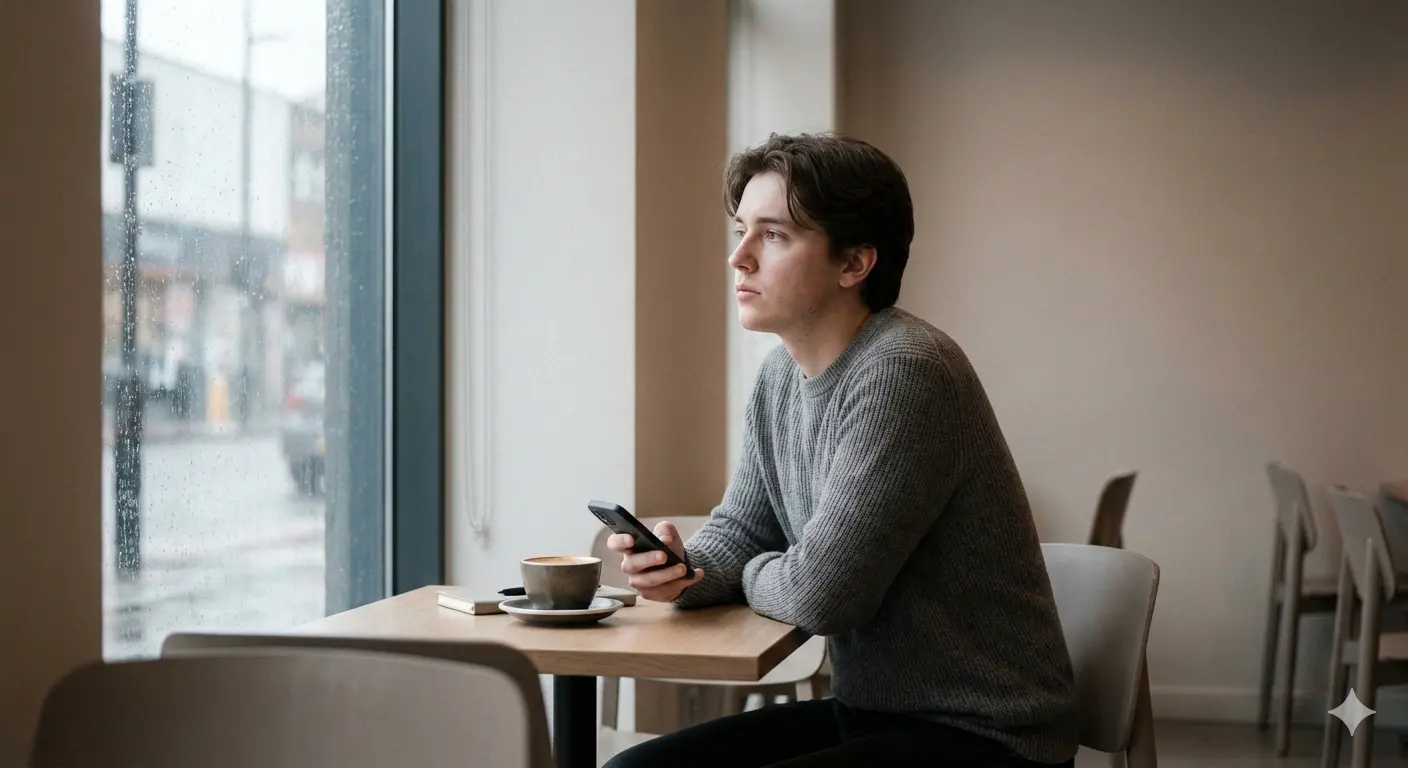
A few months ago, I was sitting in a coffee shop when I noticed something. A woman at the next table checked her phone, put it down, then checked it again two minutes later. Then again. She wasn’t waiting for an urgent call. She just did it.
That’s when it hit me: most of what shapes our lives isn’t the big decisions. It’s the things we do on repeat without thinking about them. The behaviors so automatic we don’t even register them as choices.
Here are eight everyday behaviors people repeat constantly, without realizing how deeply they’re shaping who they become.
1. Checking your phone the moment you feel bored
Most people reach for their phone during any pause. Waiting in line, sitting at a red light, commercial break. The second there’s empty space, the phone fills it.
Habits form when behaviors become automatic with minimum conscious awareness. This pattern trains your brain to avoid stillness. You’re conditioning yourself to need constant stimulation.
Over time, you lose the ability to sit with your own thoughts. Boredom becomes uncomfortable instead of neutral. Your attention span shortens. Deep thinking becomes harder because your brain expects instant distraction.
What if boredom was just space? Not something to escape, but a moment where your mind gets to rest.
2. Saying “I’m fine” when you’re not
Someone asks how you’re doing. You’re tired, stressed, or overwhelmed. But you automatically say “I’m fine.” Every single time.
This becomes a reflex. You stop checking in with yourself because the automatic response takes over. Unconscious habits fuse with identity. Eventually, you don’t know how you’re actually doing because you never stop to ask.
The disconnect between what you feel and what you say creates internal friction. You feel unheard, even when people ask. Because you’re the one not being honest.
Saying “actually, I’m having a rough day” isn’t complaining. It’s just accurate.
3. Scrolling before bed
You get into bed planning to sleep. Then you grab your phone “just for a minute” to check Instagram, TikTok, news, whatever. An hour disappears.
Negative habits like mindless scrolling hinder performance. This steals your sleep quality and morning energy. But because it happens in private, you don’t register how often you do it.
You wake up tired, blame your schedule, and never connect it to the hour you spent watching strangers’ content right before trying to sleep. The fatigue compounds daily.
Your brain needs wind-down time. Scrolling isn’t rest. It’s just more input.
4. Agreeing when you want to say no
Someone asks for your time, energy, or help. You don’t want to say yes. But you do anyway, automatically, without thinking.
Every automatic yes when you mean no teaches you that your boundaries don’t matter. Unconscious patterns are learned behaviors that become survival strategies. This pattern often starts as people-pleasing but becomes identity.
Resentment builds. Not toward the person who asked, but toward yourself for saying yes. You feel drained, overcommitted, and frustrated that no one respects your time, when really you’re the one not respecting it.
“Let me check my schedule and get back to you” buys you time to decide what you actually want.
5. Eating without tasting
You’re eating lunch while working, or dinner while watching TV. You finish the meal and barely remember eating it. You were there, but not really.
Habits are automatic behaviors that operate without conscious thought. When eating becomes background noise, you disconnect from your body’s signals. Fullness, satisfaction, enjoyment—all of it gets missed.
You feel unsatisfied even after eating because your brain wasn’t present for the experience. Then you eat more, looking for the satisfaction you never registered.
One meal a day where you just eat. No screen, no multitasking. Just noticing what you’re tasting.
6. Apologizing for things that aren’t your fault
You bump into someone who walked into you. You apologize. Someone interrupts you mid-sentence. You apologize for talking. You ask a question at work. You start with “sorry to bother you.”
Habits become embedded in how we define ourselves. Constant apologizing makes you small by habit. Not by choice, but by repetition.
You start believing you’re always in the way. That your presence is an inconvenience. The apologies reinforce a story about yourself that isn’t true.
“Excuse me” works for accidents. “Thank you for your time” works for questions. Save “sorry” for when you’ve actually done something wrong.
7. Waiting for motivation before starting
You want to work out, write, clean, make that call. But you tell yourself you’ll do it when you feel motivated. Then the feeling never comes, so you don’t do it.
Many behaviors are guided by unconscious drives, not conscious intention. Waiting for motivation trains your brain that action requires a specific feeling first. So you become dependent on that feeling showing up.
You feel stuck. Not because you’re lazy, but because you’ve created a rule that action requires motivation. The gap between wanting to do something and actually doing it gets wider.
Action often creates motivation, not the other way around. Start for two minutes. See what happens.
8. Assuming how others see you
After a conversation, you replay it and decide what the other person thought. They probably think you’re awkward. They definitely noticed that weird thing you said. They’re judging you.
Behavioral patterns shape character through repetition. When you constantly assume negative judgment, you start acting like someone being judged. You become more self-conscious, more careful, less yourself.
Social situations feel exhausting because you’re managing an imaginary audience’s imaginary opinions. The irony is most people aren’t thinking about you at all. They’re too busy worrying about what you’re thinking about them.
You don’t actually know what anyone else thinks. So why default to assuming the worst?
Conclusion
Most people don’t mean to build these patterns. They just repeat small actions until those actions become automatic. Then those automatic behaviors become identity.
But here’s the thing about patterns: once you see them, they lose some of their power. You start noticing the phone grab, the automatic apology, the midnight scroll. And noticing is the first step to choosing differently.
Your life isn’t shaped by one big choice. It’s shaped by what you do today, tomorrow, and the day after that. The behaviors you repeat without thinking are quietly building who you become.
For more on shifting patterns gently, explore our article on tiny habits that steal happiness.
If you’re working on being more intentional with daily choices, read our guide on morning routine habits for 2026.