
Table of Contents
Last Friday, I pulled out my old Monopoly set.
The one from childhood. Worn edges. Missing the thimble.
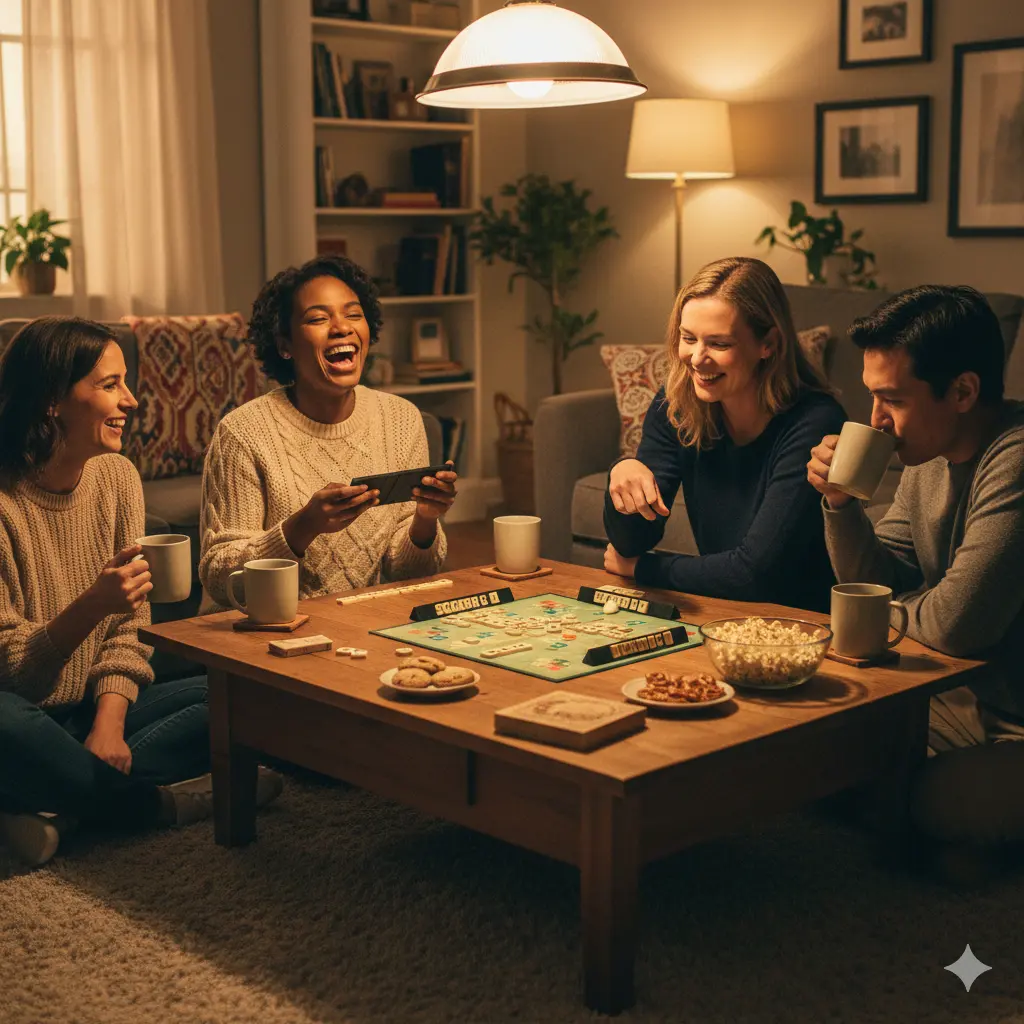
Three friends came over. We’re all in our 30s. We played for four hours straight.
Research on emotional and social skills shows playing games supports communication, cooperation, relationship building, and emotional regulation across ages. Adults who enjoy board games from their childhood aren’t being immature. They’re accidentally training social intuition every time they roll the dice.
Eight specific ways, backed by psychology.
Not random. Measurable. Repeatable.
Why Nostalgia Pulls Adults Back to Childhood Games
You remember the feeling.
Saturday night. Kitchen table. Family game night.
That memory carries emotional weight decades later. The comfort isn’t just about the game. It’s about safety, connection, and simplicity.
Adults who still enjoy board games crave that feeling.
Life gets complicated. Work stress piles up. Relationships require constant navigation. Digital overload exhausts your nervous system.
Then someone suggests Scrabble.
Suddenly, the rules are clear. The social structure is defined. The interactions feel manageable. This predictability creates psychological safety for practicing social skills without high stakes.
Nostalgia works as an emotional regulator.
It activates positive memories. Stabilizes mood. Increases openness to connection. Your brain associates these games with times when social interaction felt easier.
So you seek that feeling again.
Play as Stress Relief for Overwhelmed Adults
Your brain needs breaks from constant productivity.
Board games provide structured downtime. You’re engaged but not working. Focused but not stressed. Connected but not performing.
This combination is rare in adult life.
Most social situations demand impression management. Work networking. Dating. Family gatherings. You’re always “on,” reading rooms, managing perceptions.
Board games let you relax those demands.
The game creates the structure. The nostalgia creates the safety. You get to practice social intuition without the pressure of real-world consequences.
1. Reading Nonverbal Cues Becomes Second Nature
Watch someone’s face when they draw a card in Uno.
The micro-expression tells you everything.
Adults who enjoy board games spend hours tracking these signals. Facial expressions. Posture shifts. Hesitation patterns. Tone changes.
You learn to spot tells.
Who’s bluffing in poker. Who’s nervous about their Scrabble word. Who’s planning something sneaky in Risk.
This constant observation trains pattern recognition.
Your brain builds databases of how people signal emotions and intentions nonverbally. The more you play, the larger your reference library becomes.
Then you use these skills everywhere else.
Job interviews. First dates. Tense conversations with family. You read micro-expressions automatically because you’ve practiced for years at game tables.
Theory of Mind Develops Through Gameplay
Theory of mind means understanding others have different thoughts and perspectives than you.
Board games force this constantly.
In Clue, you track what others know. In Settlers of Catan, you predict their strategies. In Codenames, you imagine how they’ll interpret your clues.
Every turn requires perspective-taking.
Research on autism and board games shows how gameplay supports social cognition and theory of mind development, helping players recognize others’ mental states and motivations.
You’re not just playing your own game.
You’re playing their game too. Imagining their viewpoint. Anticipating their moves. Understanding their constraints.
This mental exercise sharpens intuitive reads on people in everyday situations.
2. Building Empathy Through Perspective-Taking
Empathy isn’t just feeling bad when someone’s upset.
It’s accurately reading what they’re experiencing and why.
Adults who enjoy board games practice this constantly. You need to understand why your teammate made that move. Why your opponent seems frustrated. Why someone’s checking out mentally.
Cooperative games amplify this effect.
Pandemic forces you to consider everyone’s position. You’re solve a shared problem while respecting different strengths and limitations.
This builds cognitive empathy.
You learn to think from someone else’s situation, not just your own. You recognize their constraints aren’t the same as yours. Their priorities differ. Their information is incomplete.
These insights transfer to relationships.
Your partner’s stress makes more sense when you consider their full context. Your colleague’s resistance becomes understandable when you see their perspective.
Board games taught you to look beyond your own board.
Emotional Intelligence Grows Through Shared Goals
Working toward common objectives requires emotional awareness.
You notice when someone’s struggling. When they need encouragement. When they’re overwhelmed by options. When they need space to think.
Studies on board games and emotional competencies show gameplay helps players regulate emotions, develop social relationships, and experience positive emotions that strengthen bonds.
Adults who enjoy board games develop this attunement naturally.
You adjust your communication based on what others need. You read the room’s energy. You sense when to push forward and when to slow down.
This emotional intelligence becomes automatic.
3. Mastering Negotiation Without Real Stakes
Monopoly teaches hardcore negotiation skills.
You trade properties. Make deals. Form temporary alliances. Break them when beneficial.
But nobody’s actual livelihood depends on the outcome.
This low-stakes environment lets adults who enjoy board games experiment with negotiation tactics. You try being assertive. Test soft approaches. Practice saying no. Learn to read when someone’s bluffing.
Failure costs nothing except game pieces.
So you try strategies you’d never risk at work or in relationships. You learn what works. What backfires. How people respond to different approaches.
These lessons stick.
Years later, you’re negotiating salaries or relationship boundaries. The confidence comes from hundreds of practice rounds at kitchen tables.
You’ve already navigated these dynamics countless times.
Reading Power Dynamics Becomes Instinctive
Every game has shifting power structures.
Who’s winning. Who’s desperate. Who has leverage. Who needs alliances.
Tracking these dynamics trains social intuition for hierarchies everywhere. Workplace politics. Family systems. Friend groups.
You recognize who holds actual power versus who performs it.
You spot when alliances are genuine versus temporary. You sense when someone’s position is strong versus vulnerable.
Board games made these patterns visible and predictable.
4. Learning Patience Through Turn-Taking
Waiting your turn sounds simple.
It’s not.
Adults who enjoy board games practice impulse control every game. You want to speak. Want to move. Want to react.
But you wait.
This strengthens executive function. Your prefrontal cortex manages the delay. Your nervous system tolerates the discomfort of waiting.
Board games help players practice patience, turn-taking, self-control, and managing frustration in socially appropriate ways through repeated exposure.
The skill transfers everywhere.
Difficult conversations where listening matters more than responding. Meetings where timing your input makes the difference. Conflicts where patience prevents escalation.
You’ve trained your brain to wait.
Delayed Gratification Strengthens Mental Discipline
Long strategy games teach planning ahead.
Chess. Risk. Ticket to Ride. Your current move sets up moves five turns later.
This requires delaying immediate satisfaction for future payoff.
Your brain learns to value long-term gains over short-term wins. This mindset shapes financial decisions, career choices, and relationship investments.
Adults who enjoy board games have practiced this thinking pattern for years.
5. Resolving Conflicts Gracefully
Disagreements happen during games.
Rule interpretations. Fair play questions. Competitive tensions.
How you handle these micro-conflicts reveals and builds emotional regulation. Do you explode? Withdraw? Negotiate? Find compromise?
Adults who enjoy board games have faced thousands of these moments.
You’ve learned to manage frustration. Name your feelings. Discuss solutions. Move forward without lingering resentment.
These conflict resolution skills become automatic.
When relationship conflicts arise, you apply the same principles. State the issue clearly. Listen to other perspectives. Find workable solutions. Let go after resolution.
Game nights taught you conflicts don’t have to damage relationships.
Losing Well Builds Emotional Resilience
You lose half the games you play.
Sometimes more.
This repeated exposure to disappointment trains your nervous system. You feel the frustration. Then you recover. Congratulate the winner. Set up another game.
This resilience transfers to life setbacks.
Job rejections. Relationship endings. Failed projects. You’ve already practiced bouncing back from losses hundreds of times.
Your brain knows disappointment doesn’t last forever.
6. Understanding Group Dynamics Intuitively
Party games reveal social structures.
Codenames. Werewolf. Pictionary. These games require reading the whole room simultaneously.
Adults who enjoy board games track multiple social variables at once. Who’s allied with whom. Who’s feeling left out. Who’s dominating conversation. Who needs encouragement.
This systems-level awareness is rare.
Most people focus on their own interactions. But gameplay trains you to see the entire social field. The connections. The tensions. The unspoken hierarchies.
You bring this awareness to every group setting.
Work teams. Family gatherings. Friend dynamics. You sense the room’s emotional temperature. Notice who’s struggling. Spot emerging conflicts.
This intuition makes you valuable in any group.
Team Formation Happens Naturally
Games teach you who works well together.
Who complements your style. Who clashes. Who brings out your best thinking. Who triggers your competitive side.
These observations help you build better teams everywhere. You know who to collaborate with at work. Who to invite to difficult conversations. Who to keep at friendly distance.
Board games made these assessments practice, not guesswork.
7. Enhancing Trust Through Vulnerability
Sharing strategies requires trust.
Especially in cooperative games. You admit what you don’t know. Show your weak positions. Ask for help.
This vulnerability strengthens bonds.
Adults who enjoy board games practice being imperfect in front of others. You make mistakes visibly. Laugh at yourself. Accept assistance.
These moments build psychological safety.
Your friends see you fail at Scrabble. You see them struggle with game mechanics. Nobody’s performing perfection. Everyone’s human.
This authenticity deepens relationships beyond polite surfaces.
Shared Laughter Creates Oxytocin Bonds
Game nights generate genuine laughter.
Not polite chuckles. Real, belly laughs at absurd moments. Ridiculous dice rolls. Terrible word choices. Unexpected plot twists.
This shared joy releases oxytocin, the bonding hormone.
Your brain chemically connects these people with positive experiences. The neural pathways strengthen each game night.
Years later, these friendships feel solid because they’re built on hundreds of joy-filled hours.
8. Nostalgia Bonds Create Relationship Anchors
Regular game nights become rituals.
Monthly. Weekly. However often you manage. The consistency matters more than frequency.
Adults who enjoy board games create intentional connection points. Life gets chaotic. Schedules conflict. Relationships drift.
But game night stays constant.
This ritual protects friendships from neglect. You have a standing date. A shared tradition. A reason to show up even when tired.
The games themselves become relationship shorthand.
References to past games. Inside jokes about someone’s terrible strategy. Callbacks to memorable moments. These shared memories create identity as a group.
You’re not just friends who occasionally hang out.
You’re the people who play games together. This distinction strengthens commitment.
Shared History Builds Relationship Resilience
Years of game nights create deep knowledge of each other.
You’ve seen friends across moods. Stressed. Relaxed. Competitive. Silly. Frustrated. Triumphant.
This comprehensive view builds acceptance.
You know their patterns. Their triggers. Their joys. The relationship survives conflicts because you’ve weathered hundreds of small tensions at game tables.
Adults who enjoy board games build friendships with foundation and history.
Quick reflection: Think about your favorite childhood game. Now think about the last time you played it as an adult. Did you notice yourself reading people differently? Handling conflicts more smoothly? Understanding group dynamics better? These skills didn’t appear magically. They developed through thousands of turns, hundreds of games, and years of practice at tables with people you trust.
How to Use Board Games Intentionally for Social Growth
You’ve been building these skills accidentally.
What if you approached game nights intentionally?
Choose Games Matching Your Growth Goals
Want to practice negotiation? Play Monopoly or Catan.
Building empathy? Try Pandemic or Forbidden Island.
Working on patience? Chess or Go.
Improving group awareness? Codenames or Werewolf.
Match the game mechanics to the skills you’re developing.
Practice Active Observation During Play
Instead of autopilot, notice things intentionally.
How does each person signal frustration? What body language shows they’re bluffing? When do they lean in versus check out?
Mental notes during games sharpen your observation skills.
After game night, spend two minutes reflecting. What did you notice about people? What patterns emerged? What surprised you?
This conscious processing accelerates learning.
Mix Your Gaming Groups Strategically
Playing with the same people is comfortable.
But different groups teach different lessons. Competitive friends push your strategic thinking. Casual friends emphasize connection. Mixed-age groups teach flexibility.
Variety expands your social intuition range.
Addressing the “Isn’t This Immature?” Question
Some people judge adults who enjoy board games.
“Shouldn’t you outgrow that?”
Here’s what psychology says.
Therapists and counselors use board games specifically to help clients build communication skills, manage emotions, and develop empathy across all ages.
Play isn’t childish. It’s essential for mental health throughout life.
Adults who enjoy board games are maintaining cognitive flexibility, emotional regulation, and social connection through intentional leisure.
This is maturity, not regression.
Maturity means recognizing what you need and pursuing it. If board games bring joy, build relationships, and sharpen social skills, playing them is wise adult behavior.
The judgment comes from people who associate adulthood with constant productivity.
But research shows play enhances wellbeing, creativity, and problem-solving. Adults who prioritize play often outperform those who don’t in complex social and professional situations.
Your childhood games aren’t holding you back.
They’re giving you tools most people never develop.
FAQ: Board Games and Social Intuition in Adults
Do board games improve social skills in adults?
Yes, board games demonstrably improve social skills for adults through repeated practice of perspective-taking, emotional regulation, communication, and group dynamics. Adults who enjoy board games regularly develop stronger social intuition because gameplay requires constant attention to others’ emotions, intentions, and strategies. Research shows playing board games enhances communication skills, cooperation, turn-taking, conflict resolution, and empathy. These benefits aren’t limited to children. The structured social interaction in board games provides safe practice spaces where adults refine their ability to read rooms, navigate tensions, and build connections without real-world consequences for mistakes.
What psychological benefits come from playing board games?
Board games offer multiple psychological benefits including reduced stress, improved emotional regulation, enhanced cognitive function, and stronger social bonds. Playing games activates nostalgia, which stabilizes mood and increases openness to connection. The structured rules create psychological safety, allowing adults to practice social skills without performance anxiety. Games also build frustration tolerance through winning and losing cycles, strengthen executive function through turn-taking and delayed gratification, and release oxytocin through shared laughter and cooperation. Studies show adults who enjoy board games report better mental health, stronger friendships, and greater life satisfaction compared to those who don’t engage in regular playful activities.
Why do adults feel nostalgic about childhood board games?
Nostalgia for childhood board games stems from positive emotional associations with safety, connection, and simplicity. These games represent times when social rules were clearer, stakes were lower, and relationships felt easier to navigate. Your brain associates specific games with family bonding, friendship, and joy from formative years. This emotional connection makes returning to these games feel comforting and restorative. Psychologically, nostalgia serves as an emotional regulator, helping adults cope with current stress by reconnecting with positive past experiences. Adults who still enjoy board games from childhood aren’t avoiding growth. They’re accessing emotional resources and social skills developed during those early experiences.
How do board games help with emotional intelligence?
Board games build emotional intelligence by requiring players to recognize, understand, and respond to emotions in themselves and others. Every game involves reading other players’ emotional states through facial expressions, body language, and behavioral patterns. Cooperative games especially develop empathy by forcing perspective-taking and consideration of teammates’ constraints and strengths. Competitive games teach emotional regulation through managing frustration, disappointment, and excitement appropriately. Turn-taking builds impulse control. Conflict resolution during rule disputes strengthens communication skills. Adults who enjoy board games practice these emotional intelligence components repeatedly, making the skills automatic in everyday situations. The low stakes of gameplay provide safe practice for high-stakes emotional situations in work and relationships.
Are board games used in therapy to teach emotional skills?
Yes, therapists regularly use board games as therapeutic tools to teach communication, emotional regulation, social skills, and coping strategies. Play therapy isn’t just for children. Mental health professionals use games with teens and adults to address social anxiety, relationship difficulties, and emotional processing challenges. Games provide structure that reduces anxiety while creating opportunities for authentic interaction and skill practice. The playful context makes difficult topics more approachable. Therapists observe how clients handle competition, cooperation, frustration, and success during gameplay, using these observations to guide therapeutic work. The effectiveness of game-based therapy demonstrates that adults who enjoy board games are engaging in psychologically beneficial activity, whether they realize it or not.
The Deeper Truth About Adults and Childhood Games
Adults who enjoy board games aren’t clinging to the past.
They’re using nostalgia as a tool for present connection.
The games themselves matter less than what happens around them. The conversations during setup. The laughter between turns. The friendly trash talk. The moment someone admits they need help.
These micro-interactions build social intuition.
You learn to read people not through grand gestures but through tiny signals accumulated over hundreds of hours. The way someone’s voice changes when stressed. How they lean back when confident. What their silence means.
This knowledge doesn’t come from psychology books.
It comes from paying attention while doing something enjoyable together repeatedly. The game creates the container. The nostalgia creates the safety. The repetition creates the learning.
Eight ways your social intuition sharpens.
Reading nonverbal cues. Building empathy. Mastering negotiation. Learning patience. Resolving conflicts. Understanding group dynamics. Enhancing trust. Creating relationship anchors.
None of these feel like work during game night.
You’re laughing. Competing. Strategizing. Connecting. The social skill development happens naturally because the context makes practice enjoyable.
This is why adults who enjoy board games often have stronger, more resilient relationships.
Not because games are magic. Because consistent, structured, low-stakes social practice over years builds genuine competence.
Your childhood Monopoly set taught you more about human nature than most leadership courses.
The Scrabble games with family built communication skills formal training couldn’t touch.
The Risk matches with college friends showed you group dynamics textbooks only describe.
These weren’t wasted hours.
They were investments in understanding people. Including yourself.
So next time someone questions why grown adults still play board games, you have eight research-backed answers.
Or you just smile and deal the cards.
Because you’ve already developed social intuition they’re still trying to figure out.
Ready to deepen your understanding of how everyday activities shape your social skills? Explore how daily habits build emotional intelligence and discover more ways you’re already growing without realizing it and learn to Accept Your Body: 10 Powerful Ways To Stop Self-Criticism