Table of Contents
I walked into the restaurant alone for the first time at 28.
My hands shook.
Everyone would think I had no friends. No partner. Nobody who wanted me.
I ordered anyway. Sat at a table by myself. Ate while people walked past.
Nobody stared. Nobody judged. The world didn’t end.
That dinner started something bigger.
Research on solitude across the lifespan shows intentional time alone offers distinct psychological benefits including autonomy, competence, and peaceful mood. Doing things alone isn’t about isolation. It’s about choosing yourself on purpose.
Five specific outcomes changed how I move through the world.
Why Doing Things Alone Feels So Uncomfortable at First
Your brain treats being alone in public like a threat.
The evolutionary wiring makes sense. Humans survived by staying in groups. Being alone meant danger. Rejection. Death.
That alarm still fires today.
You walk into a coffee shop solo and your nervous system screams warnings. Everyone’s watching. They’re judging. They know you’re alone because nobody wants you.
Except none of this is true.
Most people aren’t thinking about you at all. They’re absorbed in their own worlds, their own worries, their own phones.
The discomfort you feel isn’t about actual danger.
It’s about leaving your comfort zone. Challenging the story you’ve told yourself about what being alone means.
The Stories You Tell Yourself About Solo People
We learn these narratives young.
The kid eating lunch alone is lonely. The person at the movies solo is weird. The woman traveling alone is desperate or running from something.
These stories become your internal script.
When you consider doing things alone, the voice starts: “People will think you’re pathetic.” “Something must be wrong with you.” “Normal people have friends.”
Studies on social comparison and rejection sensitivity show our brains evolved to care deeply about belonging.
But modern life twisted this into believing any solo activity signals failure.
Unlearning this takes practice.
The Psychology of Healthy Solitude vs Loneliness
Solitude and loneliness aren’t the same thing.
Understanding this difference changes everything.
Solitude is chosen. Intentional. You pick to be alone because you want space, quiet, or time with yourself.
Loneliness is painful disconnection. The ache of feeling unwanted even when surrounded by people.
Research on how beliefs about solitude shape experiences shows people who view alone time as beneficial report less loneliness and greater life satisfaction. Your mindset about being alone matters more than the alone time itself.
Doing things alone reduces loneliness when it leads to self-understanding and better relationships.
It deepens loneliness when used only as escape without ever connecting authentically.
The key is intention.
Choosing Time With Yourself
Intentional solitude serves a purpose.
You go to dinner alone to practice self-reliance. Take a solo trip to hear your thoughts. Spend Saturday by yourself to recharge.
These choices build something.
Avoidant isolation tears something down. Hiding from people because you’re afraid. Never reaching out because rejection feels inevitable.
One creates strength. The other creates suffering.
Learning to tell the difference requires honest self-examination.
Outcome 1: Your Self-Trust Quietly Grows
Small decisions become yours again.
Where to eat. What movie to see. When to leave. Which path to walk.
Without asking anyone’s opinion. Without checking if it’s okay. Without needing validation.
This builds something psychologists call self-efficacy.
The belief you handle things on your own.
Every solo dinner sends evidence to your brain: “I’m capable. I made a choice. I survived the discomfort. I’m okay.”
These small proofs accumulate.
Six months of doing things alone and suddenly big decisions feel less terrifying. You trust your judgment more. You second-guess yourself less.
The foundation is hundreds of tiny moments where you proved you’re safe with yourself.
Making Choices Without the Group Chat
I used to text three friends before picking a restaurant.
Not because I needed recommendations. Because I needed someone else to make the decision.
What if I chose wrong? What if the food was bad? What if I wasted money?
Doing things alone forced me to decide.
Sometimes my choices sucked. The movie was boring. The café was overpriced. The hiking trail was harder than expected.
But I handled it.
That’s the lesson. Not that you’ll always choose perfectly. But that imperfect choices don’t destroy you.
Learning You Handle Awkward Moments
The waiter asked if I was waiting for someone.
“Nope, just me.”
Five years ago, those words would’ve felt like admitting defeat.
Now they feel neutral. True. Sometimes even proud.
You learn awkwardness passes. Other people’s curiosity doesn’t define you. Moments that felt unbearable last maybe thirty seconds.
This knowledge becomes portable.
Job interviews. Difficult conversations. Social situations where you don’t know anyone. You’ve already proven to yourself you survive discomfort.
Outcome 2: You Hear Your Real Voice Under the Noise
Whose dreams are you chasing?
This question becomes impossible to ignore when you’re alone regularly.
In groups, preferences blur. You like what your friends like. Want what your family wants. Follow paths that make sense to everyone else.
Solitude creates space for different questions.
What do I want when nobody’s watching? What feels good in my body, not just acceptable in conversation? What would I choose if I wasn’t performing for anyone?
The answers surprise you.
Noticing What You Like, Not What You Should Like
I realized I hate brunch.
Weird thing to discover at 30. But I’d been going to brunch for years because that’s what friend groups do on Sundays.
Sitting alone at home one Sunday, the relief was physical.
No scrambling for reservations. No waiting in line. No splitting bills. Just quiet morning with coffee and a book.
That’s my preference. Always was. I’d just never noticed because I was busy performing “person who enjoys social brunch.”
Doing things alone strips away performance.
You discover your actual taste in music. Your real energy limits. The hobbies you genuinely enjoy versus the ones that look good on Instagram.
This clarity is uncomfortable but necessary.
Realizing Which Dreams Are Borrowed
My mom wanted me to be a lawyer.
My ex wanted someone who loved camping.
My friends valued ambition and hustle culture.
None of these were me.
But I didn’t know that until I spent significant time alone. Away from their voices. Without their expectations filling my head.
Research on identity development shows differentiation from family and peer expectations is necessary for authentic adulthood.
Solitude gives you the quiet to notice which parts of your life feel like you and which parts you’re wearing like borrowed clothes.
Outcome 3: Your Boundaries Get Clearer and Stronger
You stop needing constant company to feel okay.
This shift is massive.
When you’re comfortable doing things alone, manipulation loses power. People-pleasing becomes optional. You’re not desperate for connection anymore because you have connection with yourself.
This changes the whole game.
When Being Alone Stops Feeling Like Punishment
People-pleasers treat alone time like exile.
If you’re alone, you’ve failed. Nobody chose you. You’re being punished by absence.
This belief makes you tolerate terrible treatment. Accept crumbs. Stay in draining relationships. Chase people who don’t want you.
Because anything feels better than being alone.
Except when you actually try solitude, you discover it’s not punishment.
Sometimes it’s peaceful. Restorative. Exactly what you needed.
This realization breaks the cycle.
Saying No Gets Less Terrifying
I said yes to everything for years.
Every invitation. Every request. Every “quick favor” that ate three hours.
Not because I wanted to. Because saying no meant risking rejection. And rejection meant being alone. And alone meant failure.
Learning to enjoy doing things alone demolished this logic.
Now saying no sometimes means saying yes to myself. To rest. To projects I care about. To people who actually value me.
The fear doesn’t disappear completely. But its grip loosens.
Studies on codependency and boundaries show people who are comfortable with solitude maintain healthier relationship patterns.
You stop chasing those who mistreat you because you’re not afraid of the alternative anymore.
Outcome 4: Your Emotional Stability Grows
Feelings don’t control you the same way.
This isn’t about becoming cold or disconnected. It’s about developing capacity to sit with emotions without immediately running.
Doing things alone forces this practice.
Sitting With Feelings Instead of Distracting
Anxiety hits while you’re eating dinner solo.
In the past, you’d text someone. Scroll TikTok. Create noise to drown the discomfort.
Alone at a table, those options feel less available.
So you sit with it.
Notice the tightness in your chest. The spiraling thoughts. The urge to flee.
And then, if you stay, something interesting happens.
The feeling peaks. Then it fades. Your nervous system learns it’s not actually in danger.
This is emotional regulation in practice.
Psychologists describe it as experiencing emotions without being overwhelmed. Building tolerance for discomfort. Developing self-soothing skills.
Doing things alone provides hundreds of low-stakes opportunities to practice.
Learning to Self-Soothe in Healthy Ways
Self-soothing used to mean numbing.
Wine. Shopping. Mindless scrolling. Anything to not feel what I was feeling.
Intentional solitude taught different tools.
Deep breathing while walking alone. Journaling at a café. Sitting on a park bench until the panic subsides.
These practices don’t eliminate emotions. They create space around them.
You learn your feelings are information, not emergencies. Waves that rise and fall. Messengers worth listening to.
This stability changes everything else.
Outcome 5: Your Relationships Become More Intentional and Aligned
Doing things alone doesn’t mean losing relationships.
It means building better ones.
When you’re solid with yourself, you attract different people. Make different choices. Tolerate different behaviors.
You Stop Chasing People Who Don’t Choose You
The friend who only texted when she needed something.
The guy who was “busy” unless he wanted company at 11 PM.
The people who kept me as backup options.
I used to chase all of them. Analyze their mixed signals. Wonder what I did wrong.
Because being chosen felt more important than choosing myself.
Doing things alone regularly shifted this.
When you’re comfortable solo, one-sided relationships lose their appeal. You notice the imbalance more clearly. You’re less willing to perform for scraps.
You start asking: “Do I feel good after seeing this person? Do they show up for me? Is this connection adding to my life or draining it?”
Then you make different decisions.
You Attract People Who Like the Real You
Something interesting happens when you stop performing.
The people drawn to your performance disappear. Good riddance.
But new people appear. Ones who resonate with your actual personality. Your real interests. The you that exists when nobody’s watching.
These relationships feel different.
Easier. More natural. Like you’re not working so hard to maintain them.
Research on secure attachment shows people comfortable with both autonomy and connection build the healthiest relationships.
You’re okay alone. You’re okay together. Neither feels threatening.
This balance attracts others with the same security.
Reality check: These five outcomes didn’t happen overnight. The first solo dinner was terrifying. The tenth felt manageable. The fiftieth felt normal. This is exposure therapy you create for yourself. Small steps. Repeated practice. Gradual rewiring of what being alone means.
How to Start Doing Things Alone Without Feeling Weird
You don’t have to start with solo travel to another country.
Start small. Build tolerance.
Low-Pressure Solo Experiments
Week one: Coffee shop with a book. Thirty minutes.
Week two: Solo walk in your neighborhood. No headphones. Just you and your thoughts.
Week three: Movie matinee on a weekday when theaters are empty.
Week four: Lunch at a casual restaurant. Counter seating if available.
Each experience teaches your nervous system: “This is safe. I’m okay. Nobody’s judging.”
The discomfort will be there. That’s normal.
But it shrinks with exposure.
Handling the Anxiety of Being Seen Alone
Your brain will catastrophize.
“Everyone thinks I’m pathetic.” “They’re all staring.” “This is humiliating.”
Try reality testing.
Look around. Actually notice what people are doing. Most are on phones. Talking to companions. Lost in their own worlds.
Nobody’s monitoring your solo status except you.
When the anxiety peaks, breathe through it. Name it. “I’m feeling self-conscious. That’s okay. This passes.”
Then stay five more minutes.
Prove to yourself you survive the discomfort.
Turning Solo Time Into Gentle Ritual
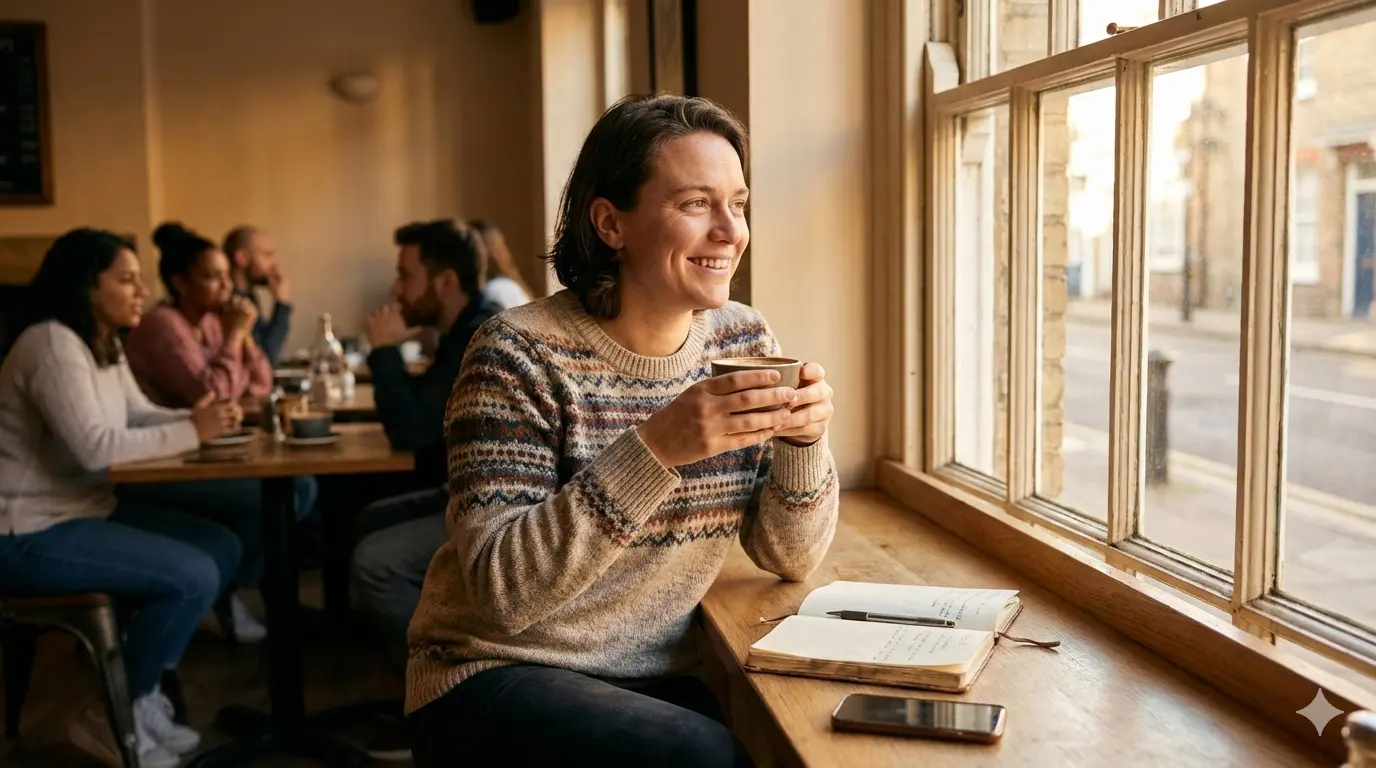
Sunday morning café became my thing.
Same place. Same order. Same corner table if available.
The predictability created safety. I knew what to expect. The staff recognized me. The environment felt contained.
This let me focus on the internal work instead of navigating constant novelty.
Once solo time feels more natural, you expand. New places. Bigger challenges. More variety.
But starting with ritual helps.
How Doing Things Alone Changes Your Relationships
Your friendships don’t end.
They evolve.
You Stop Settling for Half-Attention and Crumbs
When you’re desperate for company, you accept scraps.
Friends who cancel constantly. Partners who offer minimal effort. People who keep you around as convenient options.
Comfortable solitude raises your standards.
You notice when someone’s giving you fragments. You feel the difference between genuine connection and someone killing time.
And you’re more willing to walk away.
Not from anger. From clarity about what you deserve.
Related Relationship Guides
If you’re exploring emotional growth and relationships, these guides may help:
• Relationship Psychology: Complete Guide
• Signs Someone Is Constantly Thinking About You
• Signs of Emotional Attachment
• How to Stop Overthinking About Someone You Like
Alone Time Makes You Less Clingy and More Grounded
Anxious attachment shows up as constant checking.
Where are they? Why didn’t they text back? Are they mad at me? Do they still like me?
This exhausts everyone involved.
Regular solitude interrupts the pattern. You learn to self-regulate. Find your own center. Manage your emotions without needing someone else’s constant reassurance.
Partners and friends feel this shift.
You’re less demanding. More stable. Able to give them space without spiraling.
Ironically, this often brings people closer.
Is It Normal to Want to Do Most Things Alone?
Yes and maybe.
People exist on a spectrum. Introverts genuinely need more solo time. Extroverts recharge through social contact. Most people fall somewhere in the middle.
Wanting solitude isn’t automatically dysfunction.
But total withdrawal deserves examination.
When Solo Preference Becomes Concerning
Red flags include:
Isolating from deep hopelessness. Feeling like everyone’s better off without you. Using alone time only to ruminate on painful thoughts. Avoiding all connection from fear.
These patterns suggest depression or trauma responses needing professional support.
Healthy solitude feels restorative. Chosen. Balanced with meaningful connection.
Unhealthy isolation feels compulsive. Fear-driven. Marked by intense loneliness despite being what you “want.”
The difference is subtle but significant.
FAQ: Doing Things Alone
Is it weird to go to a restaurant or movie alone?
No. Solo dining and solo moviegoing are increasingly common, especially in urban areas. Restaurant staff and theater employees see people alone constantly and think nothing of it. The weirdness exists primarily in your mind, not in others’ perceptions. Many people prefer solo movies because they avoid talking during films and don’t have to coordinate schedules. Solo dining lets you eat what you want, when you want, at your own pace without compromise. Both activities are completely normal and becoming more socially accepted as people prioritize personal autonomy over constant companionship.
How often should I be doing things alone vs with others?
There’s no universal ratio that works for everyone. Your ideal balance depends on personality, life stage, and current needs. Introverts typically need more solitude to recharge while extroverts prefer more social time. Research suggests healthy adults benefit from regular doses of both chosen solitude and meaningful connection. Start by noticing how you feel. If constant socializing leaves you drained, you need more alone time. If isolation brings intense loneliness, you need more connection. Aim for intentional balance where neither feels forced or fear-driven. Quality matters more than quantity in both solitude and relationships.
How do I explain to friends or partner that I need more solo time?
Be direct and frame it as self-care, not rejection. Try: “I’ve realized I need more alone time to recharge and stay balanced. This isn’t about you or our friendship. It’s about me taking care of my mental health.” Explain that solo time makes you a better friend or partner because you return more grounded and present. Set clear boundaries: specific times you’ll be unavailable, activities you prefer doing solo. Reassure them the relationship matters while standing firm on your needs. People who respect boundaries will understand. Those who guilt-trip or demand constant availability reveal their own insecurity, not your wrongdoing.
What if doing things alone brings up a lot of emotions?
Emotions surfacing during solitude are normal and often valuable. Without distractions, feelings you’ve been avoiding come forward. This is the point. Sit with them. Journal about what’s coming up. Notice patterns. Are you feeling grief, anxiety, anger, relief? These emotions contain information about your life and needs. If emotions feel overwhelming, start with shorter solo periods and gradually increase. If you experience thoughts of self-harm, intense hopelessness, or can’t function, reach out to a mental health professional. Solitude should ultimately feel restorative, not devastating. Some processing discomfort is healthy. Ongoing severe distress requires support.
Can I enjoy alone time and still be a people person?
Absolutely. Enjoying solitude and enjoying social connection aren’t opposites. Many people thrive with both. You experience genuine joy with friends and genuine peace alone. This balance is often healthier than extremes. Being a “people person” doesn’t mean requiring constant company or feeling incomplete when solo. It means you value relationships and social interaction. But healthy people-persons also recognize when they need breaks, when they’re giving too much, when solitude would serve them better. The goal is flexibility: comfortable both connecting deeply and being contentedly alone. This versatility creates resilience and prevents burnout in either direction.
The Truth About Doing Things Alone
Five outcomes don’t capture everything.
There’s also freedom. Relief. Self-respect. Clarity. Peace.
Doing things alone taught me I’m good company for myself. This wasn’t arrogance. It was discovery.
I’m interesting enough to spend time with. Funny enough to make myself laugh. Capable enough to handle what comes up.
These aren’t things anyone else could teach me.
I had to prove them to myself through repeated solo experiences.
The first restaurant meal alone was terrifying.
The hundredth was normal.
Somewhere between those two points, something fundamental shifted. Being alone stopped meaning I was unlovable. It started meaning I was choosing myself.
That choice changed everything else.
My relationships improved because I stopped clinging. My career advanced because I trusted my decisions. My mental health stabilized because I developed emotional regulation skills.
None of this required becoming a hermit.
I still see friends. Have close relationships. Value connection deeply.
But now I value my own company too.
This balance, this comfort with both solitude and togetherness, is what psychologists describe as the foundation of wellbeing.
You need both. The very best social relationships and the very best solitude.
Doing things alone isn’t about rejecting people. It’s about including yourself in the circle of people who matter.
Start small if you need to.
One coffee. One walk. One meal.
Then notice what changes.
Not just externally. Internally.
How you talk to yourself. What you believe about your worth. Who you’re willing to walk away from. What you’re willing to ask for.
These shifts happen quietly. Over weeks and months, not days.
But they’re real.
And they’re worth the initial discomfort of sitting at that first solo table.
Ready to strengthen your emotional foundation through other daily practices? Explore how small daily habits build lasting emotional resilience and discover more ways to develop the internal stability that makes both solitude and connection feel safe while also learning to Accept Your Body: 10 Powerful Ways To Stop Self-Criticism