
Table of Contents
I tried body positivity first.
Stood in front of mirrors telling myself I was beautiful. Posted affirmations about loving my body. Tried forcing gratitude for every curve.
It felt exhausting. Fake. Like I was failing at something everyone else seemed to master.
Then I discovered body neutrality. Everything shifted.
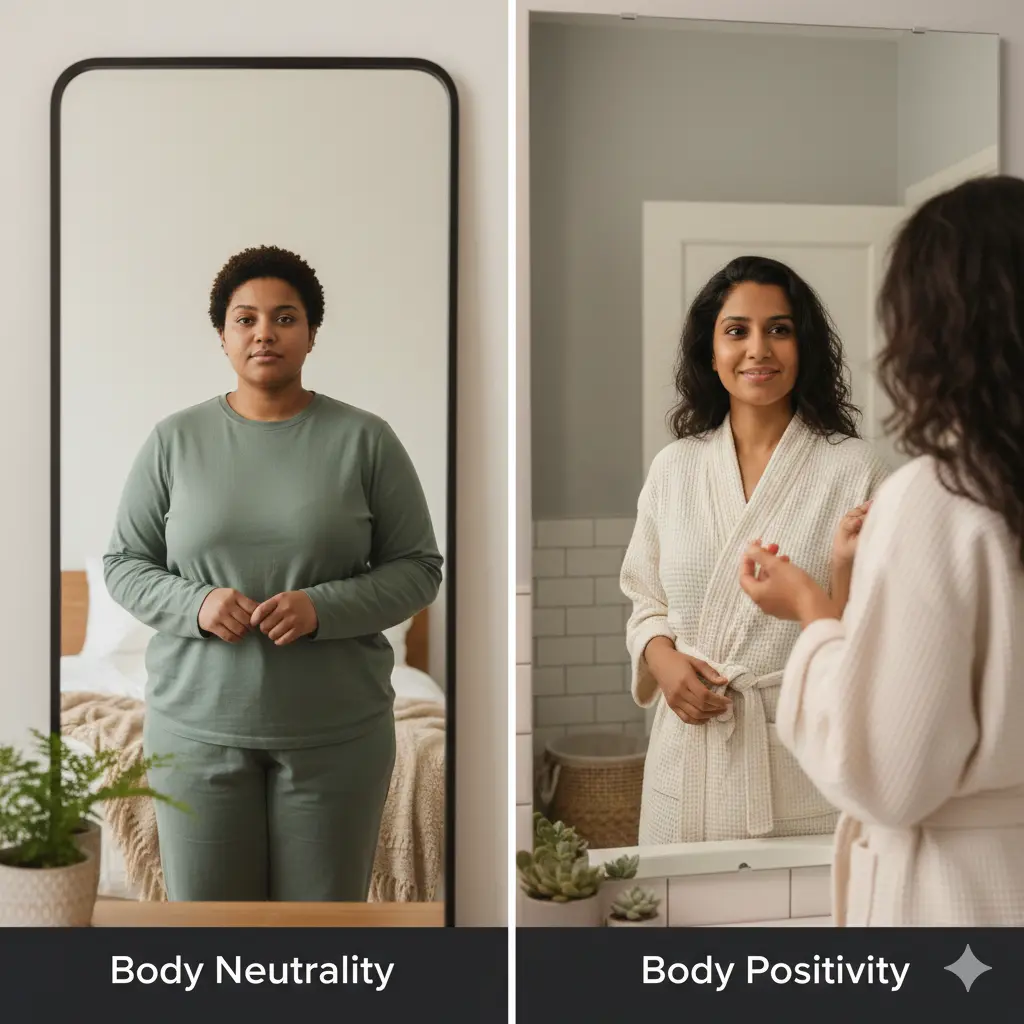
Here’s what you need to know about body positivity vs body neutrality, and which approach might work better for you.
What Is Body Positivity? (Quick Recap)
Before comparing body positivity vs body neutrality, let’s clarify what each means.
Core Philosophy of Body Positivity
Body positivity advocates unconditional acceptance and love for all bodies regardless of size, shape, ability, or appearance.
The movement says: You are beautiful no matter what. Your body deserves celebration.
According to Cleveland Clinic, body positivity encourages moving from negative to positive feelings about your body.
Understanding what is body positivity provides foundation for this comparison.
Where Body Positivity Works Well
Body positivity helps many people by:
- Challenging unrealistic beauty standards
- Normalizing diverse body types
- Building community around body acceptance
- Encouraging self-love after years of self-criticism
- Fighting discrimination against marginalized bodies
For some people, body positivity creates meaningful shifts in self-perception and confidence.
What Is Body Neutrality?
Body neutrality offers a different approach in the body positivity vs body neutrality debate.
Body Neutrality Definition
Body neutrality encourages appreciating your body’s function without requiring positive or negative feelings about appearance.
The philosophy says: Your body is neither good nor bad. Your worth isn’t tied to how you look.
Research shows body neutrality focuses on what bodies can do rather than how they look, shifting attention from appearance to functionality.
Why Body Neutrality Emerged
Body neutrality arose from body positivity’s limitations.
Many people found loving their bodies unrealistic after years of self-hatred. The pressure to feel positive created stress instead of relief.
Body neutrality emerged asking: Why do we have to love our bodies in the first place?
This question transformed the body positivity vs body neutrality conversation.
How Body Neutrality Reframes Self-Worth
Body neutrality argues your body doesn’t need to play a central role in your sense of self.
You are more than your appearance. Your value comes from who you are, not how you look.
This reframe removes pressure while maintaining respect for your body.
Key Differences: Body Positivity vs Body Neutrality
Understanding body positivity vs body neutrality requires examining specific differences.
| Aspect | Body Positivity | Body Neutrality |
| Primary Focus | Loving and celebrating your body | Respecting body function over appearance |
| Emotional Goal | Move from negative to positive | Move from negative to neutral |
| Appearance Emphasis | All bodies are beautiful | Appearance doesn’t determine worth |
| Daily Mindset | Find beauty in your body daily | Appreciate what your body does |
| Pressure Level | Requires positive feelings | Allows any feelings or no feelings |
| Best For | Those resonating with positivity | Those finding positivity unrealistic |
These differences make body positivity vs body neutrality distinct approaches serving different needs.
Why Some People Struggle With Body Positivity
The body positivity vs body neutrality debate exists because body positivity has limitations.
Emotional Invalidation
Body positivity can feel invalidating when struggling with body image.
Being told to love your body when you hate it dismisses your real feelings. You’re experiencing pain, and positivity demands you pretend you’re not.
This emotional invalidation drives some toward body neutrality in the body positivity vs body neutrality choice.
Pressure to Love Your Body
Body positivity creates pressure: you must love your body all the time.
Bad body image days feel like failure. You’re not being positive enough. You’re doing it wrong.
Research indicates forcing positivity when you don’t feel it creates cognitive dissonance and worsens mental health.
Body neutrality removes this pressure entirely.
Social Media Distortion
Body positivity on social media often contradicts its original purpose.
Thin, conventionally attractive people dominating body positivity spaces. Brands using body positivity for marketing. The movement becoming performative rather than transformative.
This commercialization complicates the body positivity vs body neutrality decision for many people.
Is Body Positivity Toxic? A Nuanced Answer
The body positivity vs body neutrality discussion often includes this question.
When Body Positivity Helps
Body positivity isn’t inherently toxic. It helps when:
- You respond well to positive affirmations
- Celebrating your body feels authentic
- You’re ready for that level of self-love
- Positivity doesn’t feel forced or fake
- You belong to marginalized bodies the movement was created for
For these people, body positivity provides meaningful healing.
When Body Positivity Harms
Body positivity becomes problematic when:
- Forcing love you don’t feel creates shame
- Pressure to be positive worsens mental health
- Focus on appearance continues despite claims otherwise
- Your body remains central to your worth
- It ignores systemic issues affecting certain bodies
These limitations explain why body neutrality emerged in the body positivity vs body neutrality landscape.
Context Matters
Body positivity isn’t universally good or bad.
It works for some people. It doesn’t for others.
This is why understanding body positivity vs body neutrality helps you choose what serves you best.
Which Approach Is Better for You?
Deciding between body positivity vs body neutrality depends on your situation.
Choose Body Positivity If:
- Positive affirmations genuinely help you
- You want to actively celebrate your body
- Loving your body feels achievable
- Positivity doesn’t create stress or pressure
- You’re ready for that emotional leap
Body positivity works beautifully for people it resonates with.
Choose Body Neutrality If:
- Loving your body feels impossible right now
- You want to stop thinking about your body constantly
- Neutrality feels more realistic than positivity
- Removing appearance from self-worth appeals to you
- You’re recovering from eating disorders or severe body image issues
Studies suggest body neutrality may be more accessible and liberating for people struggling with body image.
For Trauma Recovery
Body neutrality often works better for trauma recovery.
Trauma survivors may find body love triggering or impossible. Neutrality offers acceptance without emotional demands.
In the body positivity vs body neutrality choice for trauma, neutrality typically feels safer.
You Don’t Have to Choose Just One
The body positivity vs body neutrality debate assumes you must pick sides.
You don’t.
Blended Approach
Many people combine body positivity vs body neutrality:
Some days you feel positive about your body. Other days you feel neutral. Both are valid.
You might practice body neutrality generally while using body positivity affirmations occasionally.
There’s no rule requiring consistency.
Progression Over Time
Body acceptance isn’t static.
You might start with body neutrality when body positivity feels impossible. As healing progresses, positivity might become accessible.
Or you might discover neutrality feels better long-term than positivity.
Your approach in the body positivity vs body neutrality choice evolves as you do.
Emotional Flexibility
The healthiest approach allows emotional flexibility.
Bad body image days happen. Neutrality might feel impossible some days. Positivity might feel fake others.
Give yourself permission to move between approaches as needed rather than rigidly committing to one side of body positivity vs body neutrality.
Remember: Neither body positivity nor body neutrality is “better.” They’re different tools serving different needs. The right choice is whichever approach supports your mental health and wellbeing right now.
Finding Your Path Forward
The body positivity vs body neutrality decision isn’t binary.
You’re allowed to try both. Switch between them. Create your own hybrid approach.
Body acceptance is personal. What heals one person might not heal another.
Body positivity offers celebration and love for those ready for it. Body neutrality offers acceptance without emotional demands for those needing gentler approaches.
Both challenge harmful beauty standards. Both advocate for treating all bodies with dignity. Both recognize your worth isn’t determined by appearance.
The “right” answer in body positivity vs body neutrality is whichever approach helps you treat your body with respect while supporting your mental health.
Start where you are. Try what feels authentic. Adjust as needed.
Your body image journey is yours. Nobody else gets to dictate which approach you choose.
Ready to practice body acceptance? Explore practical body positivity tips or discover body positivity rules for 2026 supporting your journey.